
Bleisure travel, the artful blend of business and leisure, is rapidly transforming the way we approach work trips. No longer confined to strictly professional engagements, modern travel incorporates relaxation and exploration, offering a unique opportunity to enhance both productivity and personal well-being. This guide delves into the multifaceted world of bleisure, exploring its trends, practicalities, and impact on both individuals and organizations.
From optimizing itineraries to maximizing cost-effectiveness and considering ethical implications, we’ll cover the essential aspects of successful bleisure travel planning and execution. We’ll examine how companies are leveraging this approach to boost employee morale, foster innovation, and strengthen business relationships. Discover how you can transform your next business trip into a rewarding and enriching experience.
Bleisure Travel Trends and Opportunities
The convergence of business and leisure travel, known as bleisure, is rapidly evolving, driven by technological advancements, shifting work cultures, and a growing desire for work-life integration. This trend presents significant opportunities for businesses and destinations alike, demanding a nuanced understanding of emerging patterns and regional variations.Bleisure travel is no longer a niche market; it’s becoming a significant segment of the tourism industry, influencing travel patterns and destination development.
Understanding these trends is crucial for stakeholders to effectively cater to the evolving needs and expectations of bleisure travelers.
Sustainable Bleisure Tourism
The increasing awareness of environmental concerns is driving a shift towards sustainable bleisure travel. Travelers are actively seeking eco-friendly accommodations, transportation options, and activities that minimize their environmental impact. This includes a preference for hotels with green certifications, utilizing public transport or cycling, and engaging in responsible tourism activities. Companies are responding by offering carbon offsetting programs, partnering with sustainable tourism operators, and promoting responsible travel practices among their employees.
For example, a large technology firm might offer incentives for employees to choose train travel over air travel for shorter bleisure trips, while simultaneously promoting local, sustainable restaurants and experiences at their chosen destinations.
Remote Work Integration in Bleisure Travel
The rise of remote work has significantly impacted bleisure travel. Many professionals are extending business trips to incorporate leisure time, effectively blending work and vacation. This trend necessitates destinations and accommodations to offer reliable high-speed internet, co-working spaces, and conducive work environments alongside leisure amenities. Companies are recognizing this by providing employees with stipends for co-working spaces or extending business trip durations to allow for leisure activities, fostering a better work-life balance.
A successful example could be a financial services company allowing employees to work remotely from a beachside resort in Bali for a week, combining a business meeting with a longer stay for relaxation and exploration.
Geographic and Demographic Growth Potential
Bleisure travel exhibits significant growth potential across various geographical regions and demographics. Emerging markets in Asia-Pacific, particularly in countries like Thailand and Vietnam, are experiencing a surge in bleisure travel due to increasing disposable incomes and a growing middle class. Similarly, millennial and Gen Z travelers are driving the bleisure trend, prioritizing experiences and work-life integration over traditional business trips.
These demographics value authenticity and unique experiences, leading to a demand for personalized bleisure packages and off-the-beaten-path destinations. For instance, a growing number of companies are offering customized bleisure packages to Southeast Asia, combining team-building activities with cultural immersion experiences tailored to the preferences of younger employees.
Successful Bleisure Travel Programs
Several companies have successfully implemented bleisure travel programs that benefit both employees and the organization. These programs often involve offering extended business trips, providing flexible work arrangements, and incorporating team-building activities into leisure time. By fostering a positive work-life balance, these programs enhance employee morale, productivity, and retention. A successful case study might involve a multinational corporation offering a “bleisure stipend” to employees who choose to extend their business trips by a few days, allowing them to explore the destination and relax while maintaining productivity through flexible remote work options.
The positive impact on employee satisfaction and reduced burnout has been measurable, demonstrating a return on investment for the company.
Planning Bleisure Trips
Planning a bleisure trip requires careful consideration to balance work and leisure effectively. Successful bleisure travel hinges on meticulous organization and a proactive approach to scheduling, ensuring both professional obligations and personal enjoyment are met. This involves a strategic approach to itinerary development, logistical planning, and proactive preparation.
Sample Bleisure Trip Itinerary
This itinerary demonstrates a potential bleisure trip to Lisbon, Portugal, combining a two-day business conference with three days of leisure exploration.
Day 1: Arrival in Lisbon, check into hotel near the conference venue. Attend conference registration and networking event in the evening.
Day 2: Full day of conference sessions and workshops. Networking lunch and dinner with colleagues.
Day 3: Morning: Free time for exploring the Alfama district. Afternoon: Guided walking tour of the Jerónimos Monastery and Belém Tower.
Day 4: Day trip to Sintra, visiting Pena Palace and Quinta da Regaleira.
Day 5: Enjoy a leisurely morning, perhaps visiting a local market. Departure from Lisbon in the afternoon.
Logistical Aspects of Planning a Bleisure Trip
Booking flights, accommodations, and activities requires careful coordination to optimize time and minimize stress. Flights should be booked strategically, considering both the business schedule and leisure activities. For example, arriving a day early allows for jet lag recovery and exploration before the work commitments begin. Accommodations should be centrally located, providing easy access to both the business venue and leisure attractions.
Consider booking accommodations with amenities like a fitness center or pool to facilitate relaxation after a long day. Activities should be pre-booked, especially during peak season, to avoid disappointment. This includes tours, museum tickets, and restaurant reservations.
Bleisure Trip Checklist
A well-organized checklist is crucial for a smooth bleisure experience. This checklist can be adapted to suit individual needs and trip specifics.
| Business | Leisure | Travel | Essentials |
|---|---|---|---|
| Confirm meeting schedule and locations | Research and book leisure activities | Book flights and confirm times | Pack necessary clothing and toiletries |
| Pack business attire and necessary documents | Pack comfortable walking shoes and appropriate clothing | Confirm visa and passport requirements | Charge electronic devices and bring adapters |
| Prepare presentations and materials | Create a list of restaurants to try | Arrange airport transfers or rental car | Make copies of important documents |
| Print business cards and any relevant information | Research local customs and etiquette | Check baggage allowance and restrictions | Inform bank and phone provider of travel plans |
The Business Impact of Bleisure Travel
Bleisure travel, the blending of business and leisure trips, offers a compelling proposition for businesses seeking to enhance employee well-being and boost productivity while potentially optimizing travel costs. This approach recognizes that employees are more than just cogs in a machine; they are individuals with lives and needs outside the office. By strategically incorporating leisure time into business trips, companies can foster a more engaged and satisfied workforce.The potential benefits of bleisure travel are multifaceted and extend beyond simply offering a perk.
It fosters a positive work-life balance, allowing employees to de-stress and recharge, returning to work refreshed and more productive. The extended stay also provides opportunities for employees to explore new cultures, broadening their perspectives and fostering creativity. This can lead to improved problem-solving skills and innovative thinking, directly impacting the company’s bottom line.
Employee Well-being and Productivity Enhancement Through Bleisure Travel
Studies have shown a strong correlation between employee well-being and productivity. Burnout and stress are significant factors impacting workplace efficiency. Bleisure travel offers a practical solution by providing employees with time to relax and engage in activities they enjoy, helping to alleviate stress and prevent burnout. A company that encourages bleisure travel signals its commitment to employee well-being, fostering a more positive and supportive work environment.
This, in turn, can lead to increased loyalty, reduced turnover, and enhanced overall productivity. For example, a company allowing employees to extend their business trip to a conference in a coastal city by a couple of days to enjoy the beach, may find those employees returning to work with renewed energy and focus.
Cost-Effectiveness of Bleisure Travel Compared to Purely Business Trips
While it might seem counterintuitive, bleisure travel can, in certain circumstances, be more cost-effective than purely business trips. Extending a business trip by a few days may not significantly increase accommodation or transportation costs, particularly if the employee chooses budget-friendly options for their leisure activities. The added benefit of increased employee productivity and morale can offset any minor incremental costs.
For instance, a company sending an employee on a three-day business trip to a major city might find that extending the trip by two days, with the employee covering their leisure expenses, results in a minimal increase in overall travel costs while significantly boosting employee satisfaction and potentially leading to greater efficiency upon return.
Challenges and Opportunities of Implementing Bleisure Travel Policies
Implementing a bleisure travel policy requires careful consideration of both the challenges and opportunities involved. Clear guidelines regarding expense reimbursement, travel insurance, and safety protocols are essential. The company needs to establish clear parameters for the duration of the leisure extension and ensure that the employee’s leisure activities do not interfere with their business obligations. However, the opportunity to foster a positive work-life balance, boost employee morale, and potentially reduce overall travel costs outweighs the challenges.
A well-structured bleisure travel policy, implemented with clear communication and employee buy-in, can be a valuable asset to any forward-thinking organization. Companies should consider offering flexible options to cater to different employee preferences and needs, recognizing that a one-size-fits-all approach may not be suitable for everyone.
Bleisure Travel and Business Development
Bleisure travel, the blending of business and leisure, presents a powerful opportunity to enhance business development beyond traditional corporate trips. By strategically incorporating leisure activities into work travel, professionals can foster stronger relationships, explore new markets, and cultivate a more innovative mindset, ultimately leading to improved business outcomes. The extended time afforded by bleisure trips allows for deeper engagement and a more holistic approach to networking and relationship building.Bleisure travel facilitates networking and relationship building in several key ways.
The relaxed atmosphere outside of the typical business setting allows for more informal and genuine interactions. This can lead to the development of stronger, more trusting relationships with clients, partners, and colleagues. Furthermore, the opportunity to engage in shared leisure activities, such as meals, sporting events, or cultural experiences, creates a common ground that fosters connection and rapport.
This informal setting can often unlock conversations and opportunities that might not arise in a formal business environment.
Extended Stays and Enhanced Business Development
Extended stays inherent in bleisure travel provide ample time for deeper engagement with business contacts and potential clients. This extra time allows for more in-depth discussions, site visits, and relationship-building activities. For instance, a business trip to a new market could be extended to include a weekend exploring the local culture. This provides opportunities for informal meetings with local businesses and potential partners, leading to stronger collaborations and potential business opportunities that might be missed on a shorter, purely business-focused trip.
The relaxed pace also encourages more spontaneous interactions and allows for a more comprehensive understanding of the local market dynamics. The added time can also be used for more thorough market research and strategic planning.
Bleisure Travel and Fostering Innovation
Companies increasingly recognize the value of bleisure travel in fostering innovation and creativity within their teams. A change of scenery and a break from the routine office environment can stimulate new ideas and perspectives. Exposure to different cultures and environments can broaden team members’ horizons and inspire fresh approaches to problem-solving. For example, a technology company might send a team on a bleisure trip to a city known for its vibrant tech scene, combining work meetings with opportunities to explore local innovation hubs and attend industry events.
This immersion in a new environment can spark creative collaboration and lead to the development of innovative products or services. Another example could be a design firm sending a team on a bleisure trip to a historically rich city, inspiring them to draw on the local architecture and cultural influences for their next project. The resulting blend of work and leisure can foster a more relaxed and creative atmosphere, leading to improved team dynamics and increased innovation.
Ethical Considerations in Bleisure Travel
Bleisure travel, while offering a compelling blend of business and leisure, presents a unique set of ethical considerations. The increased mobility facilitated by this travel style has the potential to generate both positive and negative impacts on the environment and the communities visited. Responsible practices are crucial to mitigate these potential harms and ensure that the benefits of bleisure travel are shared equitably.The environmental impact of increased air travel, a cornerstone of bleisure trips, is undeniable.
Increased carbon emissions contribute to climate change, impacting vulnerable populations and ecosystems disproportionately. Furthermore, the consumption of resources in tourist destinations, from water and energy to local produce, can strain already limited resources if not managed sustainably. Cultural sensitivity is another key ethical concern. Unintentional disrespect for local customs, traditions, and beliefs can be deeply offensive and damaging to the social fabric of a community.
The potential for economic exploitation, where the benefits of tourism primarily accrue to large corporations rather than local communities, also requires careful consideration.
Environmental Responsibility in Bleisure Travel
Minimizing the environmental footprint of bleisure travel necessitates a multi-faceted approach. Choosing airlines with robust sustainability initiatives, such as carbon offsetting programs or investments in fuel-efficient aircraft, is a starting point. Offsetting unavoidable carbon emissions through reputable organizations is another crucial step. Beyond air travel, conscious choices regarding accommodation, transportation within destinations (consider public transport or cycling), and consumption habits (reducing waste and supporting eco-friendly businesses) are essential.
For instance, selecting hotels with strong environmental certifications, like LEED or Green Globe, demonstrates a commitment to responsible tourism. Opting for locally sourced food and reducing reliance on single-use plastics further contributes to environmental stewardship.
Cultural Sensitivity and Respect in Bleisure Travel
Respecting local cultures is paramount in ethical bleisure travel. This involves thorough research before travel, understanding and adhering to local customs and traditions, and engaging respectfully with local communities. Learning a few basic phrases in the local language demonstrates a genuine effort to connect. Supporting local businesses and artisans ensures that economic benefits are distributed more fairly.
Avoiding stereotypes and generalizations about local populations is vital; engaging with individuals as unique individuals rather than representing them as a monolithic group is crucial. Respectful photography practices, avoiding intrusive or exploitative imagery, are also important. Remember that you are a guest in their community and should behave accordingly.
Minimizing Negative Impacts on Local Communities
To minimize negative impacts, bleisure travelers should prioritize supporting local economies directly. This means choosing locally owned businesses for accommodation, dining, and activities whenever possible. Participating in ethically sourced tours and activities ensures that the economic benefits of tourism reach the local communities. It also helps protect cultural heritage and avoid contributing to unsustainable tourism practices. Responsible spending habits contribute to a more equitable distribution of tourism revenue.
Engaging in respectful interactions with locals fosters positive relationships and minimizes the potential for cultural misunderstandings or conflicts. Avoiding practices that might contribute to the exploitation of local labor or resources is also crucial. Supporting fair trade initiatives and choosing businesses that prioritize ethical labor practices is a powerful way to contribute positively.
Bleisure Travel and Business Coaching
Bleisure travel, the blending of business and leisure trips, presents a unique opportunity for professional development and personal enrichment. However, maximizing its potential requires strategic planning and a clear understanding of how to integrate it effectively into one’s career trajectory. Business coaching plays a crucial role in helping individuals harness the power of bleisure travel for significant professional growth.Business coaching provides the framework for leveraging bleisure trips to achieve specific professional goals.
Coaches help individuals identify areas needing improvement, create targeted action plans, and track progress. This structured approach ensures that bleisure travel isn’t just a pleasant diversion but a valuable tool for enhancing skills and expanding professional networks.
Maximizing Bleisure Travel for Professional Growth
A skilled business coach helps clients translate their professional development aspirations into concrete bleisure travel plans. This might involve attending industry conferences in exciting locations, networking with professionals during leisure activities, or utilizing downtime for focused learning and reflection. The coach facilitates goal setting, ensuring that each bleisure trip contributes meaningfully to the client’s overall career progression. For example, a coach might help a client attending a conference in a vibrant city like Barcelona plan specific networking events and sightseeing activities that align with their professional goals, while also scheduling time for personal reflection and rejuvenation.
Designing and Implementing Effective Bleisure Travel Strategies
Effective bleisure travel strategies are not simply about adding a vacation onto a business trip. A business coach guides clients in crafting integrated itineraries that seamlessly blend work and leisure, optimizing both productivity and relaxation. This involves considering factors such as travel time, energy levels, and the overall impact on well-being. The coach helps clients develop realistic schedules, incorporating dedicated work time, networking opportunities, and relaxation periods to prevent burnout and maximize the benefits of the trip.
For instance, a coach might help a client structure their trip to include morning work sessions, afternoon networking events, and evenings dedicated to exploring the local culture, ensuring a balanced and productive experience.
Incorporating Bleisure Travel into Business Coaching Programs
Bleisure travel can be a powerful component of comprehensive business coaching programs. It offers a unique context for practical application of coaching principles, allowing clients to test new skills and strategies in real-world scenarios. Coaches can incorporate bleisure travel into their programs by assigning clients specific tasks related to professional development during their trips, such as attending workshops, conducting informational interviews, or observing successful businesses in the chosen destination.
For example, a coach might challenge a client to attend a specific workshop during a bleisure trip to a new city and then debrief on the experience to identify key takeaways and areas for improvement. This approach provides tangible, experience-based learning opportunities that enhance the effectiveness of the coaching program.
Bleisure Travel, Business Loans, and Financial Aspects
Bleisure travel, the blend of business and leisure, offers significant benefits for entrepreneurs and small business owners. However, the financial implications require careful planning and potentially, external funding. This section explores how business loans can support bleisure trips and provides guidance on budgeting and expense tracking to ensure a financially responsible approach.Business loans can be a valuable tool for entrepreneurs and small business owners looking to incorporate bleisure travel into their schedules.
Securing a loan can provide the necessary capital to cover the costs associated with both the business and leisure aspects of the trip, enabling them to attend conferences, network with clients, and also enjoy some well-deserved relaxation. The improved well-being and potential business development stemming from a strategically planned bleisure trip can ultimately contribute to the business’s long-term success, making the loan investment worthwhile.
Careful consideration of loan terms, interest rates, and repayment schedules is, of course, crucial.
Financial Considerations for Bleisure Trips
Planning a bleisure trip necessitates a detailed budget to manage expenses effectively. This involves identifying all potential costs, from flights and accommodation to business-related expenses and leisure activities. Accurate expense tracking throughout the trip is equally important, enabling a clear understanding of where money was spent and facilitating better financial management in future bleisure trips. This approach promotes responsible spending and ensures the trip aligns with the overall financial health of the business.
Sample Bleisure Trip Budget
The following table provides a sample budget for a four-day bleisure trip to a major city. Note that these figures are estimates and can vary significantly depending on the destination, travel style, and individual preferences. This example prioritizes a balance between business and leisure activities.
| Expense Category | Item | Estimated Cost | Notes |
|---|---|---|---|
| Flights | Round-trip airfare | $800 | Consider booking in advance for better deals. |
| Accommodation | Hotel (4 nights) | $600 | Choose a hotel that offers both comfort and proximity to business meetings. |
| Business Expenses | Conference fees | $500 | Include any registration, materials, or networking event costs. |
| Business Expenses | Client meetings (meals & transport) | $200 | Allocate funds for business lunches and transportation to client meetings. |
| Activities | Sightseeing & entertainment | $300 | Allocate funds for leisure activities to balance the business aspects of the trip. |
| Miscellaneous | Meals, incidentals | $200 | Account for daily expenses, such as meals and unexpected costs. |
| Total Estimated Cost | $2600 |
Bleisure Travel and Business Models
Bleisure travel, the blending of business and leisure trips, presents significant opportunities for businesses to adapt existing models and create entirely new ones. The integration of leisure activities into business trips impacts various aspects of a company’s operations, from employee well-being and productivity to marketing strategies and overall brand perception. Understanding how bleisure travel influences business models is crucial for remaining competitive in today’s dynamic market.The rise of bleisure travel necessitates a shift in how businesses approach employee travel policies, compensation, and even product offerings.
Companies can leverage this trend to enhance employee satisfaction, boost productivity, and improve their brand image. Conversely, ignoring this trend could lead to decreased employee morale, higher turnover rates, and a missed opportunity to connect with a broader market.
Adapting Existing Business Models to Accommodate Bleisure Travel
Many existing business models can be adapted to incorporate bleisure travel. For instance, companies offering corporate travel packages can expand their services to include leisure activities and local experiences. This could involve partnering with local tour operators, restaurants, or activity providers to create customized itineraries that blend business meetings with sightseeing, cultural events, or relaxation opportunities. Furthermore, businesses can offer flexible travel policies that allow employees to extend their trips for personal reasons, providing additional vacation days or reimbursing a portion of leisure expenses.
This approach fosters employee loyalty and improves overall job satisfaction.
Bleisure Travel’s Influence on the Development of New Business Models
Bleisure travel has driven the creation of innovative business models centered around facilitating and enhancing the bleisure experience. One example is the growth of specialized travel agencies and online platforms that cater exclusively to bleisure travelers. These platforms offer curated itineraries combining business and leisure components, providing resources for booking flights, accommodations, activities, and local experiences. Another example is the emergence of co-working spaces with leisure amenities.
These spaces provide a professional environment for business travelers while offering access to gyms, pools, or other recreational facilities, seamlessly integrating work and leisure.
Examples of Businesses Successfully Integrating Bleisure Travel
Several businesses have successfully integrated bleisure travel into their operations, demonstrating the potential benefits. Airbnb, for instance, has benefited significantly from the rise of bleisure travel. Their platform offers a wider range of accommodation options suitable for both business and leisure stays, catering to the diverse needs of bleisure travelers. Similarly, many airlines and hotel chains have introduced packages and loyalty programs that reward bleisure travel, offering discounts or perks to travelers extending their business trips.
These initiatives demonstrate a proactive approach to capturing a growing market segment and enhancing customer loyalty.
Bleisure Travel vs. Traditional Business Travel
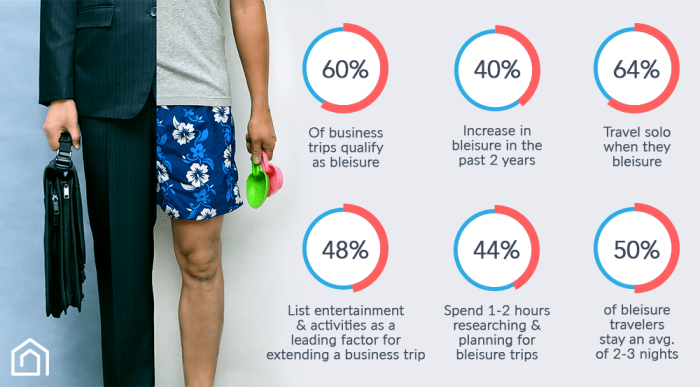
Bleisure travel, the blending of business and leisure, is increasingly popular, offering a compelling alternative to traditional business trips. This comparison examines the key differences between these two approaches, considering cost, efficiency, and employee satisfaction to highlight the advantages and disadvantages of each. Understanding these distinctions is crucial for businesses seeking to optimize travel strategies and enhance employee well-being.Bleisure and traditional business travel differ significantly across several key aspects.
While traditional business travel focuses solely on work, bleisure incorporates leisure activities, impacting various factors.
Cost Comparison
The cost of bleisure travel can vary greatly depending on the length of the leisure extension and the chosen activities. While the initial business-related expenses (flights, accommodation) remain similar, bleisure trips often add costs associated with leisure activities such as sightseeing, dining, and entertainment. Traditional business trips, on the other hand, usually focus solely on work-related expenses, potentially minimizing overall costs if the trip is short and focused.
However, frequent traditional business trips can accumulate significant expenses over time. For instance, a three-day business trip to London might cost $2000 if solely focused on work, while a bleisure extension adding two days of sightseeing could increase the total cost to $3000, but potentially offer a higher return on investment in terms of employee satisfaction and productivity.
Efficiency Comparison
Traditional business travel often prioritizes efficiency, with schedules tightly packed and focused solely on work-related meetings and activities. This approach can lead to higher productivity during the business portion of the trip but can also result in burnout and reduced overall effectiveness due to travel fatigue. Bleisure travel, while potentially adding leisure time, can still maintain efficiency if planned effectively.
The extended stay can allow for more flexible scheduling, potentially enabling meetings to be spread out over a longer period, reducing pressure and improving focus. For example, scheduling meetings on the first two days of a four-day trip, followed by leisure activities on the remaining days, can offer a balanced approach.
Employee Satisfaction Comparison
Employee satisfaction is significantly higher with bleisure travel. The inclusion of leisure time reduces stress, improves morale, and fosters a better work-life balance. This leads to increased job satisfaction and improved employee retention. Traditional business trips, often characterized by long hours and intense work schedules, can negatively impact employee well-being, leading to stress and burnout. Studies have shown a direct correlation between employee well-being and productivity; happier, more rested employees are generally more productive.
A survey by a leading travel management company indicated that 70% of employees reported increased job satisfaction after experiencing bleisure travel compared to only 35% after traditional business trips.
Comparative Table
| Feature | Traditional Business Travel | Bleisure Travel |
|---|---|---|
| Cost | Potentially lower initial cost, but high cumulative cost with frequent trips. | Higher initial cost due to leisure activities, but potentially better ROI in terms of employee satisfaction and productivity. |
| Efficiency | High efficiency during the business portion, but potential for burnout and reduced overall effectiveness. | Moderate efficiency, potentially improved focus due to less pressure and more flexible scheduling. |
| Employee Satisfaction | Lower satisfaction due to stress and lack of work-life balance. | Higher satisfaction due to reduced stress, improved morale, and better work-life balance. |
| Overall Impact | Focus on immediate business outcomes, potentially at the expense of long-term employee well-being. | Holistic approach balancing business needs with employee well-being, potentially leading to increased productivity and retention. |
Ultimately, bleisure travel represents a significant shift in how we perceive business trips. By strategically integrating leisure activities, individuals and companies can unlock a wealth of benefits, from improved employee well-being and increased productivity to enhanced networking opportunities and strengthened business development. Embracing a balanced approach to travel promises a future where work and personal enrichment seamlessly coexist, leading to more fulfilling experiences and more successful outcomes.
Essential FAQs
What are the potential downsides of bleisure travel?
Potential downsides include potential for burnout if not properly planned, increased costs if not carefully budgeted, and difficulty separating work and leisure time leading to reduced focus on either.
How can I ensure my company supports my bleisure travel plans?
Clearly communicate your bleisure plans, highlighting the potential benefits to the company (e.g., improved morale, networking opportunities). Propose a well-structured itinerary that balances work and leisure effectively. Seek approval from your supervisor or relevant department.
Are there tax implications for bleisure travel?
Yes, the tax implications vary depending on your location and the specific details of your trip. Consult with a tax professional to understand how your bleisure travel expenses might affect your tax liability.
How do I choose a suitable destination for a bleisure trip?
Consider factors such as your business needs (location of meetings, conferences), your personal interests (activities, culture), and your budget. Research potential destinations to ensure they offer a good balance of work and leisure opportunities.


