Successfully aligning business strategy with goals is crucial for organizational success. This process involves a deep understanding of the organization’s vision, translating that vision into actionable objectives, and then developing a robust strategy to achieve them. It requires careful planning, effective communication, and a commitment to continuous monitoring and adjustment. This guide explores the key elements of this process, offering practical strategies and frameworks to help businesses effectively connect their aspirations with their actions.
From defining SMART goals and utilizing frameworks like SWOT analysis and the Balanced Scorecard to overcoming common alignment challenges and fostering a culture of accountability, we will examine the multifaceted nature of strategic alignment. We’ll also delve into the roles of business development, ethics, and other crucial factors in ensuring that the chosen strategy not only achieves its objectives but also aligns with the organization’s values and long-term sustainability.
Defining Business Goals and Strategy
Aligning business strategy with goals is crucial for success. A clearly defined strategy, built upon well-articulated goals, provides direction, focus, and a framework for measuring progress. Without this alignment, efforts can be scattered, resources wasted, and overall objectives missed. This section will explore the key elements of defining business goals and formulating a robust strategy.
Key Components of a Well-Defined Business Goal
A well-defined business goal possesses several key characteristics that ensure clarity and measurability. These components contribute to effective planning and execution, ultimately increasing the likelihood of achieving the desired outcome. Ambiguous goals often lead to confusion and ultimately failure.
- Specific: The goal should be clearly stated, leaving no room for misinterpretation. It should answer the “what” of the objective.
- Measurable: Progress towards the goal should be quantifiable using metrics and key performance indicators (KPIs). This allows for objective assessment.
- Achievable: The goal should be realistic and attainable given the resources and constraints of the business. Overly ambitious goals can be demotivating.
- Relevant: The goal should align with the overall business strategy and contribute to the company’s long-term vision. Irrelevant goals distract from core objectives.
- Time-bound: The goal should have a specific deadline or timeframe for completion. This creates urgency and facilitates effective project management.
Strategic, Tactical, and Operational Goals
Different levels of goals exist within an organization, each contributing to the overall success. Understanding these distinctions is critical for effective goal setting and strategy development.
- Strategic Goals: These are high-level, long-term goals that define the overall direction of the business. They often relate to market share, expansion, or innovation. For example, “Increase market share by 15% in the next three years.”
- Tactical Goals: These are mid-term goals that support the achievement of strategic goals. They focus on specific initiatives and departments. An example might be, “Launch a new product line within the next year to capture a new market segment.”
- Operational Goals: These are short-term, day-to-day goals that directly contribute to the achievement of tactical goals. An example is, “Improve customer service response time by 10% within the next quarter.”
Examples of SMART Goals
Applying the SMART framework ensures goals are actionable and measurable.
- Increase website traffic by 20% in the next six months (Specific, Measurable, Achievable, Relevant, Time-bound): This goal is clear, uses a quantifiable metric (website traffic), is realistic given appropriate marketing strategies, directly contributes to business growth, and has a defined timeframe.
- Reduce customer churn rate by 5% by the end of the year (Specific, Measurable, Achievable, Relevant, Time-bound): This goal focuses on a key metric, customer retention, and provides a specific target and deadline.
- Improve employee satisfaction scores by 10 points on the next employee survey (Specific, Measurable, Achievable, Relevant, Time-bound): This goal targets a specific metric and allows for direct measurement of progress.
Developing a Comprehensive Business Strategy
Creating a comprehensive business strategy involves a structured approach to ensure alignment with goals.
- Conduct a SWOT Analysis: Identify the company’s internal Strengths and Weaknesses, and external Opportunities and Threats. This provides a realistic assessment of the business landscape.
- Define Vision and Mission: Articulate the long-term aspirations of the company (Vision) and its core purpose (Mission). This sets the foundation for all subsequent goals and strategies.
- Set Strategic Goals: Establish high-level, long-term goals that align with the vision and mission. These goals should be SMART.
- Develop Tactical Plans: Create detailed plans to achieve the strategic goals. These plans should Artikel specific actions, responsibilities, and timelines.
- Implement and Monitor: Put the plans into action and regularly monitor progress against the goals. Adjust the strategy as needed based on performance data.
- Review and Adapt: Periodically review the overall strategy and make necessary adjustments to ensure it remains relevant and effective in a dynamic business environment.
Aligning Goals and Strategy
Successfully aligning business goals with strategy is crucial for achieving organizational objectives. This involves translating high-level aspirations into actionable plans and ensuring everyone within the organization understands and contributes to their achievement. This section will explore various methods and frameworks for effective alignment.
Strategic Planning Frameworks: A Comparison
Several frameworks can facilitate the alignment of goals and strategy. Understanding their strengths and weaknesses is vital for selecting the most appropriate approach for a specific organization. Two widely used frameworks are SWOT analysis and the Balanced Scorecard.SWOT analysis provides a structured overview of an organization’s internal strengths and weaknesses, and its external opportunities and threats. This framework helps identify areas where the organization excels and areas needing improvement, informing strategic choices.
However, SWOT analysis can be subjective and lacks a mechanism for prioritizing actions.The Balanced Scorecard, on the other hand, offers a more comprehensive approach by considering perspectives beyond just financial performance. It incorporates perspectives such as customer, internal processes, and learning & growth. This holistic view helps ensure that strategic initiatives are aligned with multiple organizational objectives. However, the Balanced Scorecard requires careful design and implementation to avoid becoming overly complex and unwieldy.
Its effectiveness hinges on accurate data collection and regular monitoring.
Visualizing Goal-Initiative Alignment
A clear visual representation strengthens the connection between goals and strategic initiatives. The table below illustrates this relationship. This table format allows for easy tracking of progress and accountability.
| Goal | Initiative | Metrics | Timeline |
|---|---|---|---|
| Increase market share by 15% | Launch new product line | Sales revenue, market share percentage | 12 months |
| Improve customer satisfaction | Implement new customer relationship management (CRM) system | Customer satisfaction scores (CSAT), Net Promoter Score (NPS) | 6 months |
| Reduce operational costs by 10% | Streamline production processes | Cost per unit, operational efficiency ratio | 18 months |
| Enhance employee engagement | Implement employee training programs | Employee satisfaction surveys, employee turnover rate | Ongoing |
Cascading Goals Throughout the Organization
Effective goal alignment requires cascading goals from the top level down to individual teams and employees. This ensures that everyone understands their role in achieving the overall strategic objectives. Top-level goals should be broken down into smaller, more manageable goals for each department, team, and individual. This process fosters a shared understanding of priorities and promotes collective effort towards common objectives.
For example, a company’s overarching goal of increasing revenue might be broken down into departmental goals focused on sales, marketing, and product development, and further into individual sales targets for each salesperson.
Setting Key Performance Indicators (KPIs)
Key Performance Indicators (KPIs) are crucial for measuring progress towards strategic goals. KPIs should be specific, measurable, achievable, relevant, and time-bound (SMART). They provide quantifiable data to track performance, identify areas needing improvement, and demonstrate the effectiveness of strategic initiatives. Examples include sales revenue, customer satisfaction scores, market share, and employee retention rates. The selection of KPIs should directly reflect the strategic goals and be regularly monitored and reviewed to ensure they remain relevant and effective.
For instance, if a goal is to increase customer loyalty, KPIs could include customer lifetime value and repeat purchase rate.
Overcoming Alignment Challenges
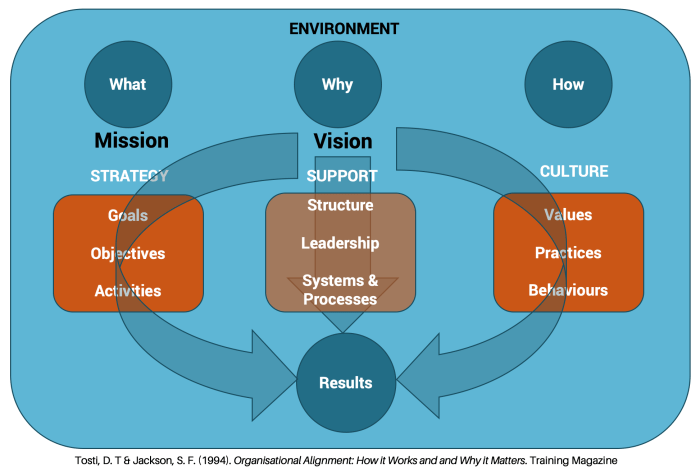
Successfully aligning business strategy with goals requires navigating various obstacles. A lack of clear communication, conflicting priorities, and insufficient accountability can all hinder progress. Addressing these challenges proactively is crucial for achieving organizational success. This section explores common hurdles, effective communication strategies, and best practices for fostering a culture of alignment.
Common Obstacles to Alignment
Several factors frequently impede the alignment of business strategy and goals. These obstacles can stem from internal organizational issues or external market forces. Understanding these challenges is the first step towards effective mitigation.
- Lack of Clear Communication: Ambiguous goals, poorly defined strategies, and insufficient communication channels can leave employees unclear about their roles and contributions to the overall objectives. This often results in conflicting priorities and wasted effort.
- Conflicting Priorities: Different departments or individuals may have competing priorities, leading to a fragmented approach and hindering progress towards the overarching business goals. This can be exacerbated by a lack of clear decision-making processes.
- Resistance to Change: Implementing a new strategy often requires significant changes in processes, roles, or responsibilities. Resistance from employees who are uncomfortable with change can significantly impede the alignment process.
- Lack of Accountability: Without clear accountability measures, individuals may not feel responsible for contributing to the overall goals, leading to a lack of ownership and commitment.
- Inadequate Resources: Insufficient resources, such as budget, personnel, or technology, can prevent the successful execution of the business strategy and hinder progress towards goals.
Strategies for Effective Communication
Effective communication is paramount for aligning business strategy and goals across the organization. This involves clearly articulating the strategy, ensuring transparency, and providing regular updates.
- Develop a clear and concise communication plan: This plan should Artikel the key messages, target audiences, and communication channels to be used. It should also specify the frequency and format of communication.
- Utilize multiple communication channels: Employ a variety of methods, including town hall meetings, emails, intranet updates, and one-on-one conversations, to reach all stakeholders effectively.
- Use visual aids: Charts, graphs, and other visual aids can help to simplify complex information and make it easier for employees to understand the business strategy and goals.
- Encourage two-way communication: Create opportunities for employees to ask questions, provide feedback, and share their ideas. This fosters a sense of ownership and commitment.
- Regularly reinforce the message: Consistent communication is key to maintaining alignment. Regularly remind employees of the business strategy and goals, and celebrate successes along the way.
Fostering a Culture of Accountability and Alignment
Creating a culture of accountability and alignment requires a concerted effort to establish clear expectations, provide ongoing support, and recognize achievements.
- Establish clear roles and responsibilities: Clearly define each individual’s role in achieving the business goals and ensure that everyone understands their responsibilities.
- Implement performance management systems: Regular performance reviews should assess progress towards goals and provide constructive feedback. These systems should tie individual performance to the overall business strategy.
- Provide training and development opportunities: Equip employees with the skills and knowledge they need to contribute effectively to the achievement of business goals.
- Recognize and reward achievements: Celebrate successes and acknowledge individual and team contributions to reinforce positive behavior and maintain motivation.
- Promote collaboration and teamwork: Encourage cross-functional collaboration to break down silos and foster a shared understanding of the business strategy and goals.
Case Study: Company X’s Successful Alignment
Company X, a mid-sized manufacturing firm, faced challenges aligning its sales and production teams. Sales often over-promised delivery times, leading to production bottlenecks and customer dissatisfaction. To address this, Company X implemented a new integrated planning system that provided real-time visibility into sales orders and production capacity. They also introduced regular cross-functional meetings to foster collaboration and communication.
This resulted in improved forecasting accuracy, reduced lead times, and increased customer satisfaction. The new system and communication protocols fostered a shared understanding of goals and responsibilities, leading to significant improvements in overall performance. This demonstrates the importance of integrating technology, communication, and collaboration to overcome alignment challenges.
The Role of Business Development, Ethics, and Other Factors
Successfully aligning business strategy with goals requires a holistic approach, considering not only the strategic plan itself but also the various internal and external factors that influence its execution. This includes the role of business development, ethical considerations, and the impact of external resources and support systems.
Business Development’s Contribution to Goal Achievement
Business development activities directly contribute to achieving business goals by identifying and cultivating new opportunities for growth. This encompasses market research, identifying potential clients or partners, developing new products or services, and expanding into new markets. For instance, a company aiming to increase market share might invest in targeted marketing campaigns (a business development activity) to reach a wider audience, directly supporting the goal of increased market penetration.
Similarly, strategic partnerships forged through business development efforts can unlock access to new technologies, resources, or distribution channels, accelerating progress toward overall business objectives.
Ethical Considerations in Aligning Business Strategy with Goals
Ethical considerations are paramount when aligning business strategy with goals. Decisions made in pursuit of profit should never compromise ethical principles. One common ethical dilemma is the tension between maximizing shareholder value and acting responsibly towards employees, customers, and the environment. For example, a company might face pressure to cut costs by outsourcing manufacturing to a country with lower labor standards.
Resolving this requires a careful assessment of the long-term consequences. A responsible solution might involve investing in fair trade practices or seeking alternative cost-reduction strategies that don’t compromise ethical standards. Another example is data privacy; a company aiming to collect vast amounts of customer data for targeted marketing must balance this goal with the ethical obligation to protect user privacy and comply with data protection regulations.
The Role of Business Coaching in Goal Alignment and Strategic Execution
Business coaching plays a crucial role in aligning goals and strategies by providing an external perspective and guidance to leadership teams. A coach can facilitate open communication, identify blind spots in the strategic plan, and help the team develop effective action plans. They can also provide support and accountability, ensuring the team stays focused on its goals and makes progress toward achieving them.
For example, a coach might help a company struggling with internal conflicts identify communication breakdowns and develop strategies for improving collaboration.
Securing Business Loans to Support Strategic Initiatives
Securing business loans can provide the financial resources necessary to implement strategic initiatives and achieve goals. Different loan types cater to specific needs. For instance, a term loan can provide a lump sum for equipment purchases or expansion, while a line of credit offers flexibility for managing short-term cash flow needs. A small business seeking to expand its operations might secure a Small Business Administration (SBA) loan, leveraging government backing to obtain favorable terms.
Conversely, a company with strong financials might opt for a conventional bank loan with potentially lower interest rates. The choice of loan type depends on the specific strategic initiative, the company’s financial health, and the terms offered by lenders.
Business Model Innovation and Strategic Goal Alignment
Business model innovation is the process of creating new business models to achieve strategic goals. This could involve adopting a subscription model, creating a platform business, or exploring new revenue streams. For example, a newspaper struggling with declining print subscriptions might adopt a digital subscription model, aligning its business model with the goal of maintaining revenue and audience engagement in a changing media landscape.
This requires a thorough understanding of the target market, competitive landscape, and technological capabilities.
The Impact of Business Travel on Achieving Strategic Goals and Business Development
Business travel plays a vital role in achieving strategic goals and fostering business development. In-person meetings, site visits, and industry conferences facilitate relationship building, collaboration, and knowledge sharing. For example, a company negotiating a significant international partnership might find face-to-face meetings crucial for building trust and establishing a strong working relationship. Attending industry conferences allows companies to learn about new trends, network with potential partners, and showcase their products or services.
However, it’s essential to balance the benefits of business travel with cost-effectiveness and sustainability considerations.
Scenario: Achieving Growth Through Integrated Business Practices
Imagine a small tech startup aiming to achieve rapid growth within three years. Through market research (business development), they identify a niche market with high demand for their product. Ethical considerations guide their decision-making, ensuring fair wages and sustainable practices. They hire a business coach to refine their strategy and improve team cohesion. They secure a small business loan to fund marketing and product development, accelerating their growth trajectory.
They innovate their business model, introducing a freemium version to attract users. Strategic business travel allows them to attend industry events and build relationships with potential investors. This integrated approach – combining business development, ethical practices, coaching, financing, model innovation, and strategic travel – significantly increases their chances of achieving their ambitious growth goal.
Aligning business strategy with goals is an ongoing, iterative process that demands consistent effort and adaptation. By clearly defining objectives, selecting appropriate frameworks, fostering open communication, and addressing potential challenges proactively, businesses can significantly improve their chances of achieving sustainable success. Remember that this alignment is not a one-time event but a continuous cycle of planning, execution, monitoring, and refinement, ensuring that the organization remains focused and adaptable in a dynamic business environment.
Q&A
What if my goals change after the strategy is implemented?
Regularly review and adjust your strategy to reflect changes in the market, internal capabilities, or organizational priorities. Flexibility is key to successful strategic alignment.
How do I ensure buy-in from all stakeholders?
Involve stakeholders in the goal-setting and strategy development processes. Transparent communication and clear explanations of the rationale behind decisions are essential for gaining support.
What are some common signs of misalignment between strategy and goals?
Signs include consistently missing KPIs, low employee morale, and a lack of clarity regarding organizational priorities. Regular performance reviews and feedback mechanisms can help identify these issues early.
How can I measure the effectiveness of my strategy?
Establish clear KPIs and regularly monitor progress. Use data-driven insights to identify areas for improvement and make necessary adjustments to the strategy.