Navigating the dynamic world of startups requires a robust understanding of business development. This guide delves into the multifaceted strategies and crucial considerations necessary for early-stage and growth-stage companies to thrive. From securing funding and building a strong brand to mastering sales and customer relationships, we explore the essential elements that contribute to sustainable growth and long-term success. We’ll examine real-world examples, practical advice, and common pitfalls to help entrepreneurs navigate the complexities of building a thriving business.
We’ll cover key aspects such as defining business development within the startup context, crafting effective growth strategies, securing vital funding, and establishing a compelling brand identity. Furthermore, we will address critical areas like sales, customer relationship management, ethical considerations, and effective financial planning. This comprehensive overview aims to equip aspiring and established entrepreneurs with the knowledge and tools needed to propel their startups towards success.
Defining Business Development for Startups
Business development in a startup context is the engine driving growth and market penetration. It encompasses a wide range of activities aimed at securing sustainable revenue streams and building a strong market position. Unlike established businesses with existing infrastructure and brand recognition, startups rely heavily on proactive business development to establish their presence and gain traction.Business development for startups goes beyond simply making sales.
It’s a strategic function encompassing market research, identifying and securing partnerships, developing go-to-market strategies, and managing investor relations. It’s about building a sustainable business model, not just chasing short-term wins.
Business Development Activities: Early-Stage vs. Growth-Stage
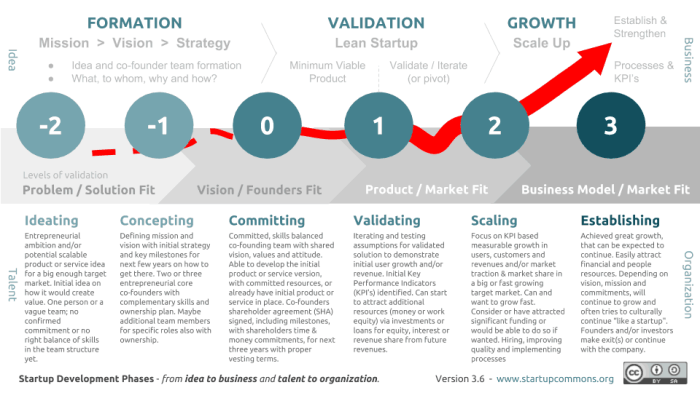
Early-stage startups typically focus on proving their minimum viable product (MVP), securing seed funding, and establishing initial customer traction. Business development efforts are heavily concentrated on building awareness, forging strategic alliances (perhaps with complementary businesses or technology providers), and securing pilot programs or early adopters. Resources are limited, so activities must be highly targeted and efficient. A strong focus is placed on building relationships and networking.
For example, an early-stage SaaS company might focus on securing partnerships with complementary software providers or participating in industry events to build brand awareness and generate leads.In contrast, growth-stage startups have already achieved product-market fit and are focused on scaling operations and expanding market share. Business development activities shift towards larger-scale partnerships, strategic acquisitions, expansion into new markets, and potentially, exploring international opportunities.
The focus becomes more about optimizing sales processes, leveraging existing customer relationships, and building brand loyalty. A growth-stage company might pursue a major strategic partnership with a large enterprise, or invest in marketing campaigns to reach a broader audience.
Key Performance Indicators (KPIs) for Business Development
Measuring the success of business development initiatives requires a set of relevant KPIs that align with the startup’s overall goals and stage of development. These KPIs should be regularly monitored and analyzed to inform strategic decision-making and ensure the effectiveness of implemented strategies.The following KPIs are commonly used:
- Number of new partnerships secured: This metric reflects the success of efforts to build strategic alliances and expand the company’s reach.
- Value of partnerships: This measures the potential revenue or other benefits generated by these partnerships, providing a more comprehensive view of their impact.
- Lead generation: The number of qualified leads generated through business development activities, indicating the effectiveness of outreach and marketing efforts.
- Conversion rate: The percentage of leads that convert into paying customers, showcasing the efficiency of the sales process.
- Customer acquisition cost (CAC): The cost of acquiring a new customer through business development initiatives, which is crucial for evaluating cost-effectiveness.
- Customer lifetime value (CLTV): The predicted revenue generated by a customer over their entire relationship with the company. A high CLTV indicates successful customer retention and long-term value creation.
- Market share growth: The increase in the company’s market share, demonstrating the impact of business development on overall market penetration.
Effective business development requires a balanced approach, tracking both qualitative and quantitative metrics to gain a complete understanding of progress and identify areas for improvement.
Strategies for Startup Growth
Startup growth hinges on a well-defined and executed business development strategy. This strategy should be dynamic, adapting to market changes and customer feedback. Success isn’t just about a great product; it’s about reaching the right customers, building strong relationships, and consistently improving your offerings. This section will explore effective strategies, successful examples, and common challenges faced by startups in their pursuit of growth.
Business Development Strategy for a Fictional Startup in the Sustainable Food Delivery Sector
Let’s consider “Green Grub,” a startup focused on delivering locally sourced, organic meals within a 20-mile radius. Their business development strategy would involve several key components. First, building strong relationships with local farms and producers ensures a consistent supply of high-quality ingredients. Second, a targeted marketing campaign focusing on environmentally conscious consumers in the area is crucial, utilizing social media and local partnerships.
Third, a robust customer loyalty program would incentivize repeat business and build brand advocacy. Finally, continuous monitoring of delivery efficiency and customer satisfaction allows for ongoing improvements and adaptation to changing demands. This multi-pronged approach combines supply chain management, targeted marketing, and customer relationship management to drive growth.
Examples of Successful Business Development Strategies Employed by Well-Known Startups
Airbnb’s early success can be attributed to their strategic focus on building a large and engaged community of hosts and guests. Their emphasis on trust and safety, coupled with effective marketing, fostered rapid growth. Similarly, Dropbox leveraged a viral referral program to achieve impressive user acquisition. By rewarding users for referring friends, they exponentially increased their user base with minimal marketing spend.
These examples highlight the importance of community building and clever growth hacking techniques in achieving rapid expansion. Another example is Spotify, which utilized a freemium model, offering a basic service for free while incentivizing users to upgrade to a premium subscription. This strategy allowed them to rapidly acquire a large user base before monetizing effectively.
Common Challenges Faced During Startup Business Development and Suggested Solutions
Startups often face a myriad of challenges during business development. A major hurdle is securing funding, especially in the early stages. Solutions include exploring grants, angel investors, and crowdfunding platforms. Another significant challenge is attracting and retaining top talent. Offering competitive salaries, benefits, and a positive work environment is key.
Market competition is also a significant factor. Differentiation through innovation, superior customer service, and effective marketing are vital for standing out. Finally, scaling operations while maintaining quality and efficiency requires careful planning and resource allocation. Implementing robust systems and processes, as well as leveraging technology, are essential for efficient scaling.
Securing Funding and Resources
Securing sufficient funding is paramount for startup survival and growth. The path to securing resources involves understanding various funding options, crafting a compelling business plan, and cultivating strong investor relationships. Navigating this process effectively can significantly impact a startup’s trajectory.Funding options for startups are diverse, each with its own characteristics and requirements. Choosing the right option depends on the startup’s stage, industry, and long-term goals.
Funding Options for Startups
Startups typically explore several avenues for funding. Angel investors are individual high-net-worth individuals who invest their own capital in exchange for equity. Venture capital firms pool money from various sources to invest in high-growth potential companies, often requiring a significant equity stake. Grants, offered by government agencies or private foundations, provide non-dilutive funding, meaning they don’t require equity in return, but are usually highly competitive and often tied to specific criteria.
Bootstrapping, using personal savings or revenue generated by the business, offers control but can limit growth potential. Crowdfunding platforms allow startups to raise capital from a large number of individuals through online campaigns, fostering community engagement but requiring effective marketing and a compelling story. Finally, Small Business Administration (SBA) loans offer government-backed financing, making them attractive for smaller businesses but involving a rigorous application process.
Preparing a Compelling Business Plan
A well-structured business plan is crucial for attracting investors. It serves as a roadmap outlining the startup’s vision, market analysis, strategy, financial projections, and management team. A compelling business plan should clearly articulate the problem the startup solves, the target market, the proposed solution, the competitive landscape, and the financial projections, demonstrating a clear path to profitability. It should also highlight the team’s expertise and experience, showcasing their ability to execute the plan effectively.
A strong executive summary is essential, providing a concise overview of the entire plan and grabbing the reader’s attention immediately. The financial projections section should be realistic and detailed, incorporating various scenarios and sensitivity analyses. Finally, the plan should clearly define the funding request and how the funds will be utilized. For example, a plan might Artikel the allocation of funds for research and development, marketing and sales, and team expansion.
A realistic timeline for achieving key milestones should also be included.
Building Investor Relationships
Cultivating strong relationships with potential investors and partners is a critical aspect of securing funding. This involves networking at industry events, attending investor pitch competitions, and proactively reaching out to potential investors. Building rapport requires demonstrating transparency, professionalism, and a deep understanding of the market and the startup’s potential. A strong network can provide valuable insights, mentorship, and access to future funding rounds.
Regular communication, even after securing funding, is crucial for maintaining these relationships. For instance, providing regular updates on progress, milestones achieved, and challenges faced, builds trust and strengthens the ongoing partnership. Investors appreciate consistent and open communication, demonstrating accountability and commitment to success.
Sales and Customer Relationship Management (CRM)
For startups, effective sales and customer relationship management (CRM) are crucial for survival and growth. Limited resources necessitate strategic approaches to sales, while a well-implemented CRM system provides the backbone for sustainable customer relationships, driving repeat business and fostering brand loyalty. This section will explore effective sales strategies for resource-constrained startups, the importance of CRM systems, and best practices for building lasting customer relationships.Effective sales strategies for startups hinge on maximizing impact with minimal expenditure.
Instead of broad, expensive marketing campaigns, startups often benefit from focusing on targeted, personalized outreach. This allows for efficient resource allocation and ensures that marketing efforts resonate with the ideal customer profile.
Effective Sales Strategies for Startups with Limited Resources
Startups often thrive by leveraging cost-effective strategies like content marketing, social media engagement, and strategic partnerships. Content marketing, through blog posts, informative videos, or engaging infographics, establishes the startup as a thought leader and builds trust with potential customers. Social media platforms provide a direct line of communication, enabling startups to interact with their target audience, build community, and drive traffic to their website.
Strategic partnerships with complementary businesses can expand reach and tap into established customer bases. Focusing on a niche market allows for concentrated efforts and more effective targeting, rather than trying to appeal to everyone. Referral programs, which incentivize existing customers to refer new business, are another powerful tool for growth, leveraging word-of-mouth marketing.
The Importance of Implementing a Robust CRM System for Managing Customer Relationships
A robust CRM system is essential for organizing and managing customer interactions, ensuring consistent service, and tracking sales progress. It provides a centralized repository of customer data, enabling sales teams to understand customer needs, preferences, and purchase history. This data-driven approach allows for personalized communication and targeted marketing campaigns. Furthermore, a CRM system facilitates efficient lead management, tracking leads from initial contact to conversion, and identifying potential bottlenecks in the sales process.
This allows for proactive adjustments and improved sales efficiency. Beyond sales, a CRM system helps manage customer support inquiries, track customer satisfaction, and identify opportunities for improvement in products or services. Ultimately, a well-implemented CRM contributes significantly to customer retention and the long-term success of the startup.
Best Practices for Building Customer Loyalty and Driving Repeat Business
Building customer loyalty requires a commitment to providing exceptional customer service and creating a positive brand experience. Proactive communication, such as personalized email campaigns or targeted social media updates, keeps customers engaged and informed. Offering exclusive benefits or loyalty programs rewards customer loyalty and incentivizes repeat purchases. Actively seeking and responding to customer feedback demonstrates a commitment to improvement and fosters trust.
Regularly gathering customer feedback through surveys or direct interaction helps identify areas for improvement and allows for proactive adjustments to meet evolving customer needs. Personalization is key – addressing customers by name, remembering past interactions, and tailoring communication to individual needs all contribute to a more positive customer experience and build stronger relationships. A consistent brand voice and message across all communication channels ensures a unified and professional image.
Business Development and Related Concepts
Business development, business coaching, and business strategy are distinct yet interconnected disciplines crucial for startup success. Understanding their differences and how they complement each other is vital for effective growth. This section will explore these concepts, delve into ethical considerations within business development, and examine the role of business travel in expanding opportunities.
Comparison of Business Development, Business Coaching, and Business Strategy
Business development focuses on expanding a company’s reach and revenue streams. It encompasses activities like market research, strategic partnerships, and identifying new revenue opportunities. Business coaching, conversely, provides personalized guidance and support to entrepreneurs and business leaders, focusing on improving their skills, decision-making, and overall leadership effectiveness. Business strategy, on the other hand, involves creating a long-term plan to achieve a company’s objectives, considering factors such as market analysis, competitive landscape, and resource allocation.
While business development executes the plan, business strategy defines it, and business coaching helps the leaders execute it effectively. They work synergistically: a strong business strategy informs effective business development activities, and business coaching enhances the leadership capabilities to implement both successfully.
Ethical Considerations in Business Development
Ethical conduct is paramount in business development. Maintaining transparency and integrity in all interactions with clients, partners, and investors is crucial. This includes avoiding misleading marketing claims, ensuring fair competition, and protecting intellectual property rights. Ethical lapses can severely damage a company’s reputation and long-term prospects, leading to loss of trust and potential legal ramifications. For instance, using deceptive marketing tactics to attract customers or engaging in unfair competition can result in significant financial and reputational damage.
Building trust through ethical practices fosters lasting relationships and contributes to sustainable growth.
The Role of Business Travel in Fostering Business Development Opportunities
Business travel plays a significant role in forging relationships, networking, and securing deals. Face-to-face interactions can build rapport and trust far more effectively than virtual communication. Attending industry events, meeting with potential partners and clients, and conducting site visits are all valuable activities facilitated by travel. However, it’s crucial to weigh the costs and benefits of different travel options.
Comparison of Business Travel Options
| Travel Option | Pros | Cons | Suitability |
|---|---|---|---|
| Air Travel | Speed, covers long distances | High cost, environmental impact, potential delays | Essential for long-distance meetings, time-sensitive situations |
| Train Travel | More comfortable than air, often more environmentally friendly, opportunity for focused work | Slower than air travel, limited reach | Suitable for shorter distances, meetings requiring less urgency |
| Video Conferencing | Cost-effective, convenient, environmentally friendly | Limited personal interaction, potential technical difficulties | Ideal for initial meetings, follow-ups, internal communications |
Analyzing Business Models and Strategies
Understanding the interplay between business models and strategies is crucial for startup success. A well-defined business model Artikels how a company creates, delivers, and captures value, while the chosen strategy dictates how it achieves competitive advantage in the market. A mismatch between these two can lead to significant challenges, even with a brilliant product or service. This section explores different business models and strategies, providing a framework for startups to analyze and select the most appropriate options for their specific context.
Lean Canvas Business Model for a Fitness App Startup
Let’s illustrate a lean canvas for a fitness app called “FitTrack.” This app provides personalized workout plans, nutritional guidance, and progress tracking. The key elements of the Lean Canvas are:
| Problem | Solution | Key Partners | Key Activities | Key Resources | Value Propositions | Customer Segments | Customer Relationships | Revenue Streams | Cost Structure |
|---|---|---|---|---|---|---|---|---|---|
| Lack of personalized fitness plans, difficulty tracking progress, inconsistent motivation. | Personalized workout plans, nutritional advice, progress tracking, community features. | Fitness instructors, nutritionists, technology providers. | App development, content creation, customer support. | App platform, data analytics tools, expert network. | Personalized fitness journey, improved health and well-being, convenient tracking. | Health-conscious individuals, fitness enthusiasts, beginners. | In-app support, community forum, email newsletters. | Subscription fees (monthly, annual), premium features, affiliate marketing. | App development & maintenance, content creation, marketing & sales, customer support. |
Examples of Different Business Models
Several established business models offer distinct approaches to value creation and capture.
- Subscription Model: This model involves recurring payments for ongoing access to a product or service. Examples include Netflix (streaming video), Spotify (music streaming), and SaaS (Software as a Service) companies. This model generates predictable revenue streams but relies on customer retention.
- Freemium Model: This combines free basic services with paid premium features. Examples include Dropbox (cloud storage), Spotify (music streaming – free with ads), and many mobile games. This model attracts a large user base while monetizing a subset of engaged users.
- Affiliate Marketing: This involves earning a commission by promoting other companies’ products or services. Influencers on social media frequently use this model, as do many websites and blogs. This model relies on driving traffic and conversions but can be less predictable than subscription models.
Comparison of Business Strategies
Different competitive strategies aim to achieve a sustainable competitive advantage.
- Differentiation Strategy: This involves offering unique products or services that command premium prices. Luxury brands often employ this strategy, focusing on quality, design, or brand image. For example, Apple differentiates itself through design and user experience.
- Cost Leadership Strategy: This focuses on achieving the lowest production and distribution costs, enabling competitive pricing. Walmart and other discount retailers exemplify this strategy. This approach requires efficient operations and often involves economies of scale.
- Focus Strategy: This concentrates on a specific niche market segment, catering to its unique needs. A specialty coffee shop focusing on organic, fair-trade beans would be an example. This allows for deeper customer understanding and tailored offerings.
Successfully developing a startup involves a multifaceted approach that blends strategic planning, resource acquisition, brand building, and customer relationship management. This guide has provided a framework for understanding the key components of this process, from defining your business development strategy and securing funding to implementing effective sales and marketing techniques. By focusing on these critical areas and adapting them to your specific business model, you can significantly increase your chances of achieving sustainable growth and building a thriving enterprise.
Remember, continuous learning, adaptation, and a relentless focus on customer value are paramount to long-term success in the competitive world of startups.
FAQ
What is the difference between a business plan and a pitch deck?
A business plan is a comprehensive document outlining your business strategy, market analysis, financial projections, and operational plans. A pitch deck is a concise presentation summarizing key aspects of your business plan, designed to persuade investors or partners.
How can I find a mentor for my startup?
Network within your industry, attend industry events, leverage online platforms connecting mentors with mentees, and reach out to successful entrepreneurs you admire.
What are some common mistakes startups make in their business development efforts?
Common mistakes include neglecting market research, failing to define a clear value proposition, underestimating the importance of customer relationships, and not adapting to market changes quickly enough.
How important is networking for startup success?
Networking is crucial for startups. It helps secure funding, find partners, recruit talent, and gain valuable insights and advice. Building strong relationships is essential for success.