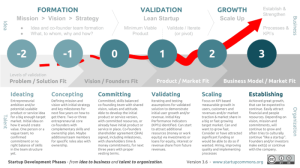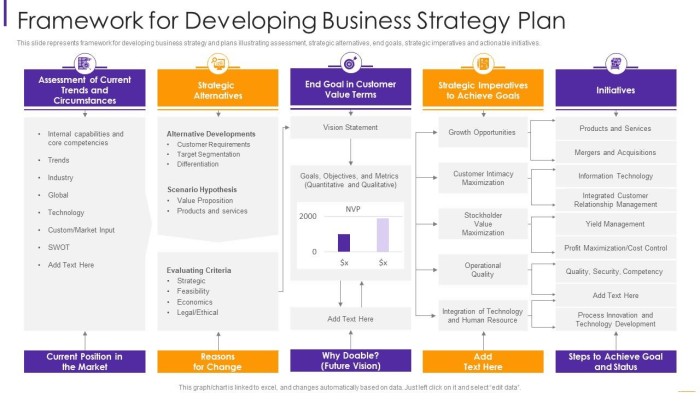
Navigating the complex landscape of startup business development requires a multifaceted approach. Success hinges on a well-defined strategy encompassing market analysis, innovative product development, effective marketing, and astute financial management. This exploration delves into each crucial element, providing a framework for building a thriving venture.
From identifying your target audience and crafting a compelling value proposition to securing funding and building a high-performing team, we’ll examine the key decisions and strategies that determine a startup’s trajectory. We’ll also explore ethical considerations, the role of coaching, and the importance of adapting to market changes and competitive pressures. The ultimate goal is to equip aspiring entrepreneurs with the knowledge and tools needed to increase their chances of success.
Defining Startup Business Development Strategies
Developing a robust business development strategy is crucial for any startup aiming for sustainable growth. It involves a multifaceted approach encompassing market analysis, customer acquisition, strategic partnerships, and revenue generation, all meticulously planned and executed to achieve specific, measurable, achievable, relevant, and time-bound (SMART) goals. A well-defined strategy acts as a roadmap, guiding the startup through the often-turbulent early stages and setting the foundation for future success.Effective startup business development strategies possess several core components.
These include a clear understanding of the target market, a compelling value proposition, a defined go-to-market strategy, a strong sales and marketing plan, and a commitment to continuous improvement based on data-driven insights. Furthermore, adaptability and a willingness to pivot based on market feedback are essential for navigating the uncertainties inherent in the startup environment.
Core Components of Effective Startup Business Development Strategies
Effective strategies are built upon a solid foundation of understanding the target market and the problem the startup solves. A detailed market analysis helps identify the ideal customer profile, their needs, and their pain points. This information informs the development of a compelling value proposition, which clearly articulates the unique benefits the startup offers compared to competitors. A go-to-market strategy Artikels the specific channels and tactics used to reach the target market, while a robust sales and marketing plan ensures consistent engagement and lead generation.
Finally, a commitment to data analysis and iterative improvements allows the startup to refine its strategy based on real-world results.
Short-Term versus Long-Term Strategies for Startups
Short-term strategies focus on immediate goals, such as securing initial customers, generating early revenue, and building brand awareness. These might involve targeted marketing campaigns, strategic partnerships with complementary businesses, or participation in industry events. Conversely, long-term strategies encompass broader objectives, such as establishing market leadership, expanding into new markets, and achieving sustainable profitability. Long-term strategies often involve developing innovative products or services, building a strong brand reputation, and securing strategic investments.
The balance between short-term and long-term goals is crucial; immediate wins can provide momentum and resources to support the pursuit of long-term objectives.
Examples of Successful Startup Business Development Strategies
Several startups have demonstrated successful business development strategies across various industries. For instance, Airbnb disrupted the hospitality industry by leveraging a peer-to-peer model and a strong online platform to connect travelers with unique accommodations. Their initial focus on building a critical mass of users and listings, followed by strategic expansions into new markets and service offerings, exemplifies a successful blend of short-term and long-term strategies.
Similarly, Slack revolutionized workplace communication by providing a user-friendly platform that integrated seamlessly with existing tools. Their focus on organic growth, combined with targeted marketing to specific professional demographics, fueled rapid adoption and market dominance.
Hypothetical Business Development Strategy for a Fictional Tech Startup
Let’s consider “InnovateAI,” a fictional tech startup developing AI-powered personalized learning software for K-12 education. Their short-term strategy would focus on securing pilot programs with a select number of schools, generating positive case studies, and building brand awareness through targeted marketing to school administrators and educators. Their long-term strategy would involve expanding the platform’s capabilities, developing integrations with existing educational platforms, and potentially expanding into other educational markets, such as higher education or corporate training.
They might also explore strategic partnerships with educational publishers or technology companies to broaden their reach and enhance their product offerings. Data analysis would be crucial throughout, informing improvements to the software, marketing efforts, and overall business development approach.
Market Analysis and Target Audience Identification
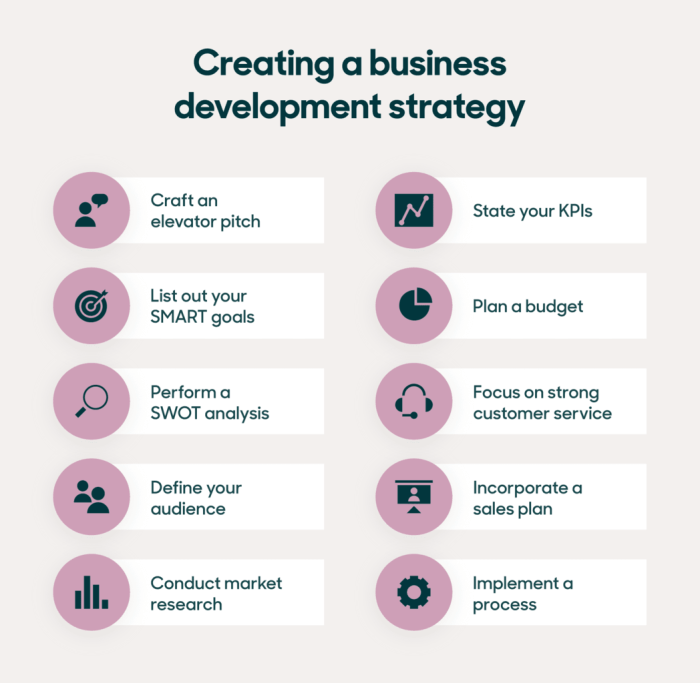
Understanding your market and identifying your ideal customer are foundational to a successful startup. Without a clear picture of who you’re selling to and the landscape in which you’re operating, your efforts risk being misdirected, leading to wasted resources and ultimately, failure. This section details the crucial steps involved in conducting thorough market analysis and precisely defining your target audience.Market analysis goes beyond simple market research; it’s about identifying the specific trends and dynamics that will either propel or hinder your startup’s growth.
A deep understanding of these factors allows for proactive strategy development and minimizes unforeseen challenges. This includes not only analyzing the size and growth potential of your market but also assessing the competitive landscape, technological advancements, and regulatory changes that may affect your business.
Key Market Trends Relevant to Startup Success
Identifying key market trends requires a multi-faceted approach. This involves analyzing industry reports, conducting competitor analysis, monitoring social media conversations, and actively participating in industry events. For example, the increasing adoption of cloud-based solutions is a significant trend that many SaaS startups can leverage. Conversely, understanding the potential impact of stricter data privacy regulations is crucial for companies handling sensitive user information.
By staying informed about these shifts, startups can position themselves to capitalize on opportunities and mitigate potential risks.
Ideal Target Audience Profile for a New SaaS Product
A detailed target audience profile goes beyond simple demographics. It involves creating a comprehensive persona that encompasses psychographics, behavioral patterns, needs, and pain points. For a new SaaS product aimed at small business owners, for example, the ideal customer profile might include details such as: business size (e.g., 1-50 employees), industry (e.g., retail, food service), technological proficiency (e.g., comfortable with basic software), budget constraints (e.g., limited IT budget), and key business objectives (e.g., increased efficiency, improved customer service).
This detailed profile informs every aspect of product development, marketing, and sales.
Market Segmentation Techniques for Startups
Several techniques exist for segmenting markets, each with its strengths and weaknesses. Geographic segmentation divides the market based on location (e.g., targeting specific regions or countries). Demographic segmentation uses factors like age, gender, income, and education. Psychographic segmentation focuses on values, lifestyles, and personality traits. Behavioral segmentation looks at purchasing habits, usage patterns, and brand loyalty.
Startups often benefit from employing a combination of these techniques to create highly targeted segments, ensuring marketing efforts are efficient and effective. For example, a startup might initially focus on a niche segment (e.g., environmentally conscious millennials in urban areas) before expanding to broader markets.
Competitive Analysis in Developing a Successful Strategy
Competitive analysis is not merely about identifying competitors; it’s about understanding their strengths, weaknesses, strategies, and market positioning. This involves researching competitors’ products, pricing, marketing efforts, customer reviews, and overall market share. By analyzing the competitive landscape, startups can identify opportunities to differentiate themselves, develop unique value propositions, and build a sustainable competitive advantage. This might involve offering a superior product, focusing on a niche market, or employing innovative marketing strategies.
For example, a new SaaS product might differentiate itself through superior customer support or a more user-friendly interface.
Product Development and Innovation
Product development in a startup context is a dynamic and iterative process, significantly different from established companies. It demands agility, rapid response to feedback, and a constant pursuit of improvement. Success hinges on the ability to quickly build, test, and refine products based on real-world user interaction. This iterative approach allows startups to minimize risk and maximize the chances of market fit.The iterative nature of startup product development is characterized by short development cycles, frequent releases, and continuous user feedback integration.
This contrasts with traditional waterfall methodologies that emphasize extensive upfront planning and longer development cycles. Startups often employ Agile methodologies, emphasizing flexibility and collaboration. Each iteration refines the product, moving closer to the ideal solution based on user needs and market demands.
Iterative Product Development in Startups
The iterative process typically involves several key stages: ideation and conceptualization, prototyping and testing, MVP development and launch, user feedback collection and analysis, product refinement and improvement, and finally, scaling and expansion. Each stage informs the next, creating a continuous loop of development and improvement. For example, a social media app might start with a basic MVP featuring only core functionalities like posting and commenting.
After initial user feedback, they might iterate by adding features like direct messaging, group chats, or story sharing, based on user demand and market trends.
Examples of Innovative Product Features Driving Startup Success
Several startups have achieved remarkable success through innovative product features. Consider Dropbox, which simplified file sharing and storage through its intuitive interface and cloud-based approach. Similarly, Airbnb revolutionized the hospitality industry with its peer-to-peer accommodation platform, offering a unique and personalized travel experience. These examples highlight the power of innovation in creating disruptive products that capture significant market share.
Another example is Spotify, whose innovative music streaming model with personalized playlists and collaborative features disrupted the music industry.
Minimum Viable Product (MVP) Development Factors
Developing a Minimum Viable Product (MVP) requires careful consideration of several key factors. Prioritizing core features and functionality is crucial to avoid unnecessary complexity and delays. This involves identifying the most essential features that deliver core value to the target audience. The MVP should be simple enough to develop quickly and affordably yet functional enough to gather meaningful user feedback.
Scalability and maintainability should also be considered, even at the MVP stage, to ensure the product can grow and adapt to future needs.
- Core Functionality: Identify the absolute essential features that solve the core problem for your target audience.
- Target Audience: Clearly define your ideal customer and their needs.
- Technology Stack: Choose technologies that are suitable for rapid development and scaling.
- Budget and Resources: Develop a realistic budget and allocate resources effectively.
- Timeline: Set achievable milestones and deadlines for each development stage.
Gathering and Integrating Customer Feedback
Gathering and integrating customer feedback is a crucial part of the iterative development process. This can be achieved through various methods, including user surveys, beta testing programs, focus groups, and analyzing user behavior data. Actively soliciting feedback from early adopters and regularly analyzing user data helps to identify areas for improvement and ensures the product remains aligned with user needs.
The feedback collected should be carefully analyzed to identify recurring themes and patterns. This data informs future iterations and helps prioritize features for development. It’s important to establish clear channels for feedback collection and create a system for efficiently tracking, analyzing, and implementing user suggestions. Regularly reviewing feedback and adapting the product based on insights gathered ensures a product-market fit.
Building a successful startup is a dynamic and iterative process. By combining a robust business plan with agile adaptation, a clear understanding of your market, and a dedicated team, entrepreneurs can navigate the challenges and capitalize on opportunities. This journey demands resilience, innovation, and a relentless pursuit of excellence, but the rewards of building a thriving business can be immensely fulfilling.
Remember that continuous learning and refinement of your strategies are essential for long-term growth and sustainability.
FAQs
What is the most common reason startups fail?
Lack of market need or poor execution are frequently cited reasons. Many startups fail to validate their product-market fit early on or struggle with effective marketing and sales.
How long does it typically take to see a return on investment (ROI) in a startup?
The time to ROI varies significantly depending on the industry, business model, and funding. Some startups achieve profitability quickly, while others require several years of investment before generating returns.
What are some common mistakes to avoid when seeking funding?
Common mistakes include an underdeveloped business plan, unrealistic financial projections, and a lack of understanding of investor expectations. Pitching to the wrong investors is also a frequent misstep.
How important is networking for startup success?
Networking is crucial. It helps secure funding, build partnerships, recruit talent, and gain valuable insights and mentorship. Strong networking skills can significantly increase a startup’s chances of success.