Navigating the complex world of business often presents ethical dilemmas that can significantly impact a company’s success and reputation. From seemingly minor decisions to major strategic choices, the ethical compass guiding these choices shapes not only the bottom line but also the overall societal impact of an organization. This exploration delves into the crucial role of ethical behavior in shaping responsible and sustainable business practices.
We’ll examine various ethical frameworks, analyze real-world case studies showcasing both exemplary and problematic decision-making, and discuss practical strategies for fostering a culture of ethical conduct within organizations. The goal is to equip readers with a comprehensive understanding of ethical considerations in business and empower them to make informed, responsible choices.
Defining Ethical Behavior in Business
Ethical behavior in business refers to conducting operations with integrity, fairness, and a commitment to societal well-being. It goes beyond simply adhering to the law; it involves proactively considering the impact of decisions on all stakeholders – employees, customers, suppliers, communities, and the environment. This commitment builds trust, fosters positive relationships, and ultimately contributes to long-term success.
Core Principles of Ethical Business Conduct
Several core principles underpin ethical business conduct. These include honesty and transparency in all dealings, fairness in pricing and competition, respect for the rights and dignity of all individuals, accountability for actions and decisions, and a commitment to sustainability and environmental responsibility. Adherence to these principles ensures that businesses operate with integrity and build a strong ethical foundation.
Examples of Ethical Dilemmas Faced by Businesses
Businesses frequently encounter situations requiring difficult ethical choices. For example, a company might face a dilemma regarding the safety of a product versus the cost of implementing safety improvements. Another common dilemma involves balancing the need for profit maximization with the ethical treatment of employees, such as fair wages and safe working conditions. The decision to outsource manufacturing to a country with lower labor standards and weaker environmental regulations also presents a significant ethical challenge.
These dilemmas highlight the complexities of ethical decision-making in a competitive business environment.
Real-World Case Studies Illustrating Ethical and Unethical Decisions
The Johnson & Johnson Tylenol crisis of 1982 exemplifies ethical decision-making. When several deaths were linked to tampered Tylenol capsules, Johnson & Johnson prioritized public safety, immediately recalling all products and incurring significant financial losses. This proactive approach, though costly, preserved the company’s reputation and reinforced its commitment to ethical conduct. In contrast, the Volkswagen emissions scandal of 2015 demonstrates unethical behavior.
Volkswagen intentionally installed software designed to cheat on emissions tests, prioritizing short-term profits over environmental responsibility and public health. This deception led to massive fines, legal battles, and irreparable damage to the company’s reputation.
Impact of Ethical Behavior on a Company’s Reputation
Ethical behavior significantly impacts a company’s reputation. Companies known for their ethical practices attract and retain talented employees, build stronger relationships with customers, and enjoy increased investor confidence. This translates into improved brand loyalty, enhanced market share, and ultimately, greater profitability. Conversely, unethical behavior can lead to boycotts, lawsuits, regulatory penalties, and a severely damaged reputation, impacting long-term sustainability and potentially leading to business failure.
Comparison of Ethical and Unethical Business Practices
| Aspect | Ethical Practices | Unethical Practices |
|---|---|---|
| Product Safety | Prioritizes safety, implements rigorous testing, and readily recalls defective products. | Cuts corners on safety measures to reduce costs, ignores safety concerns, and delays or avoids recalls. |
| Employee Relations | Offers fair wages, provides safe working conditions, respects employee rights, and promotes diversity and inclusion. | Exploits workers with low wages, unsafe conditions, and discriminatory practices. |
| Environmental Responsibility | Minimizes environmental impact, invests in sustainable practices, and complies with environmental regulations. | Disregards environmental regulations, pollutes excessively, and prioritizes profit over environmental protection. |
| Transparency and Accountability | Operates with honesty and transparency, takes responsibility for mistakes, and fosters open communication. | Engages in deceptive practices, hides information, avoids accountability, and lacks transparency. |
Ethical Decision-Making Frameworks

Navigating the complex landscape of business ethics requires a robust framework for decision-making. Several established ethical frameworks offer guidance, each with its own strengths and weaknesses. Understanding these frameworks allows businesses to approach ethical dilemmas systematically and consistently. This section explores three prominent frameworks: utilitarianism, deontology, and virtue ethics, comparing their approaches and illustrating their application in practical business scenarios.
Utilitarianism in Business Decision-Making
Utilitarianism, a consequentialist ethical theory, focuses on maximizing overall happiness or well-being. In a business context, this means choosing the course of action that produces the greatest good for the greatest number of people affected. A company using a utilitarian framework might prioritize a decision that increases overall profit, even if it means some individual employees experience job losses, provided the overall benefit to stakeholders (employees, customers, shareholders, etc.) outweighs the negative consequences.
However, a weakness of utilitarianism lies in its potential to justify actions that harm minorities or individuals if it benefits the majority. Predicting and accurately weighing all potential consequences can also be challenging. For example, a cost-cutting measure that increases profits might negatively impact employee morale and productivity in the long run, a consequence that may be difficult to foresee and quantify initially.
Deontology in Business Decision-Making
Deontology, in contrast to utilitarianism, emphasizes moral duties and rules, irrespective of the consequences. This framework focuses on adhering to principles such as honesty, fairness, and respect for individuals. A deontological approach in business would prioritize upholding legal and ethical obligations, even if doing so reduces profitability. For instance, a company might refuse to engage in price-fixing, even if it means losing market share, because it violates the principle of fair competition.
The strength of deontology lies in its clarity and consistency; however, its rigidity can make it difficult to navigate complex situations where competing duties exist. What happens when the duty to protect employees clashes with the duty to maximize shareholder value? A strict deontological approach may struggle to offer a satisfactory resolution.
Virtue Ethics in Business Decision-Making
Virtue ethics focuses on the moral character of the decision-maker rather than the consequences of actions or adherence to rules. It emphasizes cultivating virtues such as honesty, integrity, compassion, and fairness. A business applying a virtue ethics framework would strive to foster a culture where ethical behavior is ingrained in the organization’s values and practices. This approach encourages ethical leadership and empowers employees to make responsible decisions.
While virtue ethics promotes a strong ethical culture, it can be subjective and lack clear guidelines for resolving ethical dilemmas. What constitutes “honesty” or “fairness” might vary depending on individual interpretations and cultural contexts. The effectiveness also relies heavily on the ethical character of the individuals within the organization.
A Step-by-Step Process for Applying an Ethical Framework
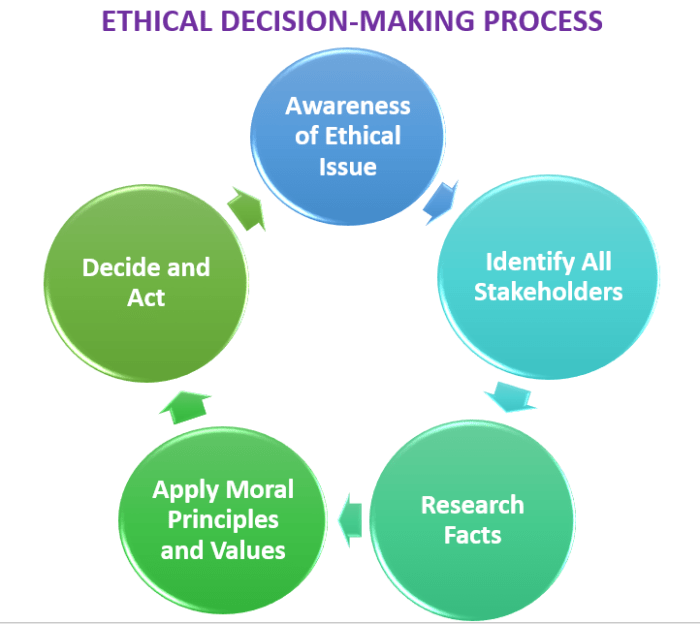
A systematic approach to ethical decision-making can mitigate the inherent challenges in each framework. This process can be adapted to suit any chosen framework:
- Identify the ethical issue: Clearly define the problem and the stakeholders involved.
- Gather relevant information: Collect all pertinent facts and data.
- Identify potential courses of action: Brainstorm various options.
- Evaluate options using chosen framework: Analyze each option based on the principles of utilitarianism, deontology, or virtue ethics.
- Consider potential consequences: Assess the short-term and long-term impacts of each option on all stakeholders.
- Make a decision: Select the option that best aligns with the chosen ethical framework and its principles.
- Implement and monitor: Put the decision into action and monitor its effects.
Resources for Learning More About Ethical Decision-Making Frameworks
Numerous resources are available for deepening understanding of ethical decision-making frameworks. These include academic journals, textbooks on business ethics, online courses offered by universities and professional organizations, and professional development workshops focused on ethical leadership and decision-making. Specific examples include the Markkula Center for Applied Ethics at Santa Clara University, the Ethics Resource Center, and various publications from the Institute for Business Ethics.
Exploring these resources allows for continuous learning and refinement of ethical decision-making skills within the business context.
The Role of Business Leadership in Promoting Ethics
Business leaders play a pivotal role in shaping the ethical landscape of their organizations. Their actions, decisions, and communication directly influence the ethical conduct of employees at all levels. Creating and maintaining a culture of ethical behavior is not merely a matter of compliance; it’s a strategic imperative for long-term success and sustainability.Ethical leadership isn’t just about avoiding wrongdoing; it’s about proactively fostering a workplace where ethical considerations are paramount in every decision.
This involves setting clear expectations, providing resources and support, and holding individuals accountable for their actions. Ultimately, ethical leadership builds trust, enhances reputation, and improves organizational performance.
Responsibilities of Business Leaders in Fostering Ethical Behavior
Business leaders bear the ultimate responsibility for establishing and upholding ethical standards within their organizations. This includes developing and implementing ethical codes of conduct, providing ethics training, creating mechanisms for reporting ethical violations, and consistently demonstrating ethical behavior themselves. They must also ensure that ethical considerations are integrated into all aspects of business operations, from strategic planning to daily decision-making.
Failing to do so can lead to significant reputational damage, legal liabilities, and financial losses.
Effective Leadership Strategies for Promoting Ethical Conduct
Several effective strategies can be employed by leaders to cultivate ethical conduct. One crucial approach is leading by example. Leaders who consistently demonstrate ethical behavior in their own actions inspire similar conduct in others. Open communication is equally important; creating a safe space for employees to raise ethical concerns without fear of retribution encourages a culture of transparency and accountability.
Furthermore, establishing clear ethical guidelines and providing regular ethics training empowers employees to make informed ethical decisions. Finally, consistently enforcing ethical standards and holding individuals accountable for misconduct reinforces the importance of ethical behavior. For example, a CEO who publicly acknowledges and addresses an ethical lapse within the company demonstrates a commitment to ethical conduct and accountability, thereby reinforcing the organization’s ethical values.
Creating a Culture of Ethical Behavior Within an Organization
Cultivating a culture of ethical behavior requires a multifaceted approach. This begins with clearly articulating the organization’s ethical values and integrating them into the company’s mission and vision statements. Leaders must then actively communicate these values to employees through various channels, including internal communications, training programs, and performance evaluations. Creating mechanisms for reporting ethical violations, such as anonymous hotlines or ethics committees, is also essential.
Regular ethics training, which should cover relevant laws, regulations, and ethical dilemmas, helps equip employees with the knowledge and skills to navigate ethical challenges. Furthermore, celebrating ethical conduct and recognizing employees who exemplify ethical behavior can reinforce positive norms and encourage ethical decision-making. A strong ethical culture is not simply a set of rules; it’s a shared understanding and commitment to ethical principles throughout the organization.
Importance of Ethical Leadership Training Programs
Ethical leadership training programs are crucial for equipping leaders and employees with the knowledge, skills, and tools to navigate ethical dilemmas. These programs should not simply focus on compliance with laws and regulations, but also on developing ethical reasoning skills, promoting ethical awareness, and fostering a culture of ethical decision-making. Effective training programs often incorporate case studies, role-playing exercises, and interactive discussions to engage participants and promote critical thinking.
By providing employees with a framework for ethical decision-making, these programs help to prevent ethical lapses and promote a culture of integrity. Regular updates to the training materials ensure that employees remain informed about evolving ethical standards and best practices.
Examples of Ethical Codes of Conduct for Businesses
Many organizations have developed detailed ethical codes of conduct to guide employee behavior. These codes typically address issues such as conflict of interest, bribery and corruption, confidentiality, data privacy, and environmental responsibility. For instance, a technology company’s code of conduct might include specific guidelines on data security and user privacy, reflecting the unique ethical challenges faced in that industry.
Similarly, a pharmaceutical company’s code of conduct would likely emphasize ethical research practices and patient safety. These codes often provide concrete examples of ethical dilemmas and offer guidance on how to resolve them. They serve as a valuable resource for employees and leaders alike, reinforcing the organization’s commitment to ethical conduct and providing a framework for ethical decision-making.
Effective codes of conduct are not merely documents to be filed away; they are living documents that are regularly reviewed, updated, and integrated into the organization’s culture.
Ethical Considerations in Specific Business Areas
Ethical considerations permeate every aspect of business operations, demanding careful attention to ensure responsible and sustainable practices. Navigating these complexities requires a proactive approach, integrating ethical principles into every decision-making process, from initial strategy to daily operations. Failure to do so can lead to significant reputational damage, legal repercussions, and ultimately, business failure.
Ethical Challenges in Business Development
Business development often involves navigating competitive landscapes and pursuing aggressive growth strategies. However, this pursuit must not compromise ethical standards. Unfair competition, misleading marketing, and prioritizing short-term gains over long-term sustainability are common ethical pitfalls. Maintaining transparency and integrity in all interactions with potential clients and partners is crucial.
- Avoid deceptive marketing practices or false advertising.
- Respect intellectual property rights and avoid plagiarism.
- Ensure fair competition and avoid anti-competitive behavior.
- Maintain transparency in all business dealings.
Ethical Considerations in Business Strategy Formulation
The development of a business strategy should explicitly incorporate ethical considerations. This includes defining a clear ethical framework, assessing the potential impact of strategic decisions on stakeholders, and establishing mechanisms for monitoring and evaluating ethical performance. Strategies that prioritize profit maximization at the expense of ethical conduct are ultimately unsustainable.
- Prioritize stakeholder interests alongside shareholder value.
- Conduct thorough environmental impact assessments.
- Ensure compliance with all relevant laws and regulations.
- Establish clear ethical guidelines for decision-making.
Ethical Implications of Business Loans and Financing
Securing business loans and financing often involves disclosing sensitive financial information and making promises about future performance. Ethical considerations center on transparency and honesty in financial reporting, responsible use of funds, and adherence to loan agreements. Misrepresenting financial information or failing to meet repayment obligations can have serious consequences.
- Provide accurate and complete financial information to lenders.
- Use borrowed funds for their intended purpose.
- Adhere to the terms and conditions of loan agreements.
- Maintain open communication with lenders.
Ethical Issues Related to Business Models and Their Impact on Stakeholders
The chosen business model significantly impacts various stakeholders, including employees, customers, suppliers, and the community. Ethical concerns arise when business models prioritize profit over the well-being of these stakeholders. For example, exploitative labor practices, unsustainable environmental impacts, or unfair pricing strategies raise serious ethical questions.
- Ensure fair compensation and working conditions for employees.
- Minimize environmental impact through sustainable practices.
- Engage in fair and transparent pricing practices.
- Support the community through corporate social responsibility initiatives.
Ethical Concerns in Business Travel and Expense Reporting
Business travel and expense reporting offer opportunities for unethical behavior, such as exaggerating expenses, claiming personal expenses as business expenses, or failing to properly document travel-related costs. Maintaining accurate records and adhering to company policies are crucial for ethical conduct in this area.
- Accurately record all business travel expenses.
- Only claim legitimate business-related expenses.
- Follow company policies regarding travel and expense reimbursement.
- Maintain detailed receipts and documentation.
The Role of Business Coaching in Promoting Ethical Behavior
Business coaching can play a vital role in fostering ethical behavior within organizations. Effective coaching involves helping individuals understand ethical dilemmas, develop ethical decision-making skills, and integrate ethical principles into their daily work. By providing guidance and support, coaches can help build a culture of ethical conduct within the organization.
- Promote ethical awareness and understanding.
- Develop ethical decision-making skills.
- Foster a culture of ethical conduct.
- Provide support and guidance in navigating ethical dilemmas.
The Impact of Unethical Behavior
Unethical business decisions, while potentially offering short-term gains, invariably lead to significant and far-reaching negative consequences. These repercussions extend beyond financial losses, impacting a company’s reputation, employee morale, and even its legal standing. Understanding these impacts is crucial for fostering a culture of ethical conduct within any organization.The potential consequences of unethical business decisions are multifaceted and severe.
They can erode public trust, damage brand reputation, and ultimately threaten the long-term viability of a business. Financial penalties, legal battles, and decreased productivity are common outcomes. Furthermore, the ethical climate within a company directly influences employee engagement and overall performance.
Financial and Legal Ramifications of Unethical Behavior
Unethical business practices often result in substantial financial penalties and legal repercussions. Companies found guilty of fraud, bribery, or other illegal activities face hefty fines, legal fees, and potential lawsuits from affected parties. These financial burdens can severely impact profitability and even lead to bankruptcy. For example, the 2008 financial crisis highlighted the devastating consequences of unethical lending practices and a lack of regulatory oversight, leading to the collapse of numerous financial institutions and widespread economic hardship.
The resulting legal battles and government investigations cost billions of dollars and damaged the public’s trust in the financial industry for years. Moreover, the Sarbanes-Oxley Act of 2002, enacted in response to major corporate accounting scandals, demonstrates the significant regulatory response to unethical behavior, imposing stricter accounting standards and corporate governance rules to prevent future misconduct.
Impact on Employee Morale and Productivity
A culture of unethical behavior significantly impacts employee morale and productivity. When employees witness or experience unethical actions, it erodes their trust in leadership and the organization as a whole. This can lead to decreased job satisfaction, increased stress, and ultimately, reduced productivity. Employees may become disengaged, less motivated, and more likely to leave the company. Conversely, a strong ethical culture fosters a positive work environment, increasing employee engagement and loyalty, which in turn boosts productivity and overall performance.
Studies have shown a direct correlation between ethical leadership and employee well-being, indicating that a commitment to ethical conduct benefits both the organization and its employees.
Case Study: The Long-Term Effects of Unethical Decision-Making
Enron’s collapse serves as a stark example of the devastating long-term consequences of unethical decisions. Through aggressive accounting practices and fraudulent activities, Enron artificially inflated its earnings, misleading investors and stakeholders. The subsequent revelation of these unethical practices led to the company’s bankruptcy, significant financial losses for investors, and the loss of thousands of jobs. Beyond the immediate financial fallout, Enron’s scandal damaged public trust in corporate America, prompting stricter regulations and increased scrutiny of corporate governance practices.
The long-term impact included a decline in investor confidence, increased regulatory oversight, and a lasting negative impact on the energy industry’s reputation. The case remains a cautionary tale, highlighting the severe and lasting repercussions of prioritizing short-term gains over ethical conduct.
Promoting Ethical Business Practices
Building and maintaining a strong ethical culture requires a proactive and multifaceted approach. It’s not a one-time initiative but an ongoing commitment that permeates every aspect of the business, from leadership decisions to employee interactions. Success depends on clear communication, consistent enforcement, and a willingness to adapt strategies as the business evolves.Implementing and maintaining ethical standards involves a comprehensive strategy that goes beyond simply creating a code of conduct.
It requires embedding ethical considerations into the very fabric of the organization. This includes developing robust training programs, establishing clear reporting mechanisms, and fostering a culture where ethical concerns are openly discussed and addressed without fear of reprisal.
Strategies for Implementing and Maintaining Ethical Standards
Effective implementation begins with a clearly defined code of ethics, easily accessible to all employees. This code should provide specific examples and guidelines for navigating ethical dilemmas in various situations. Beyond the code, regular ethics training, incorporating real-life scenarios and case studies, is crucial. This training should not be a passive lecture but an interactive experience that encourages critical thinking and discussion.
Furthermore, establishing an ethics committee or a designated ethics officer provides a neutral point of contact for employees to raise concerns. This committee should have the authority to investigate allegations and recommend appropriate actions. Finally, regular communication and reinforcement of ethical standards through company newsletters, internal memos, and leadership messaging are essential to maintain a consistent focus on ethical conduct.
The Importance of Regular Ethical Audits and Reviews
Regular ethical audits provide a systematic assessment of the effectiveness of the company’s ethical programs and policies. These audits involve reviewing company practices, policies, and procedures against established ethical standards, identifying potential weaknesses, and recommending improvements. For example, a review might assess the effectiveness of the whistleblower protection program or the clarity of the code of conduct. The findings of these audits should be shared with employees to demonstrate the organization’s commitment to ethical behavior and transparency.
Moreover, regular reviews ensure the ethical framework remains relevant and responsive to changes in the business environment, legal landscape, and societal expectations. Without periodic reviews, ethical standards can become outdated and ineffective.
Methods for Reporting and Addressing Ethical Violations
A robust reporting mechanism is essential for identifying and addressing ethical violations promptly and fairly. This typically involves establishing a confidential reporting system, accessible through multiple channels, such as a dedicated hotline, online portal, or direct contact with the ethics officer. All reports should be investigated thoroughly and impartially, with appropriate disciplinary actions taken against those found to have violated ethical standards.
Transparency in the investigation and resolution process is crucial to build trust and confidence among employees. The outcome of investigations should be communicated appropriately, ensuring that all employees are aware of the consequences of unethical behavior. Furthermore, the company should protect whistleblowers from retaliation, reinforcing the importance of reporting unethical conduct.
Checklist for Assessing the Ethical Implications of a Business Decision
Before making any significant business decision, a structured ethical assessment is crucial. This checklist can guide the process:
- Identify all stakeholders: Who will be affected by this decision (employees, customers, suppliers, community, etc.)?
- Consider potential impacts: What are the potential positive and negative consequences for each stakeholder?
- Apply ethical frameworks: How does this decision align with the company’s code of ethics and relevant legal and regulatory requirements (e.g., utilitarianism, deontology)?
- Assess potential risks: What are the risks associated with this decision, including reputational damage, legal liability, and financial losses?
- Seek diverse perspectives: Consult with colleagues, legal counsel, and ethics experts to gain different viewpoints.
- Document the decision-making process: Maintain a clear record of the considerations and rationale behind the decision.
Transparency and Accountability in Promoting Ethical Behavior
Transparency and accountability are cornerstones of an ethical business culture. Transparency involves open communication about company policies, practices, and performance, including any ethical challenges faced and how they were addressed. This fosters trust and builds confidence among stakeholders. Accountability means holding individuals and the organization responsible for their actions and decisions. This includes establishing clear lines of responsibility, implementing effective oversight mechanisms, and ensuring that ethical violations are investigated and addressed promptly and fairly.
For instance, publicly disclosing the results of ethical audits and responding transparently to media inquiries about ethical concerns demonstrate a commitment to accountability. This proactive approach builds trust and strengthens the organization’s reputation.
Ultimately, ethical behavior in business decision-making is not merely a matter of compliance but a fundamental aspect of sustainable success. By understanding and applying ethical frameworks, fostering strong leadership, and prioritizing transparency and accountability, businesses can cultivate a positive reputation, enhance employee morale, and contribute to a more responsible and equitable business environment. The journey towards ethical excellence is ongoing, requiring continuous reflection, adaptation, and a steadfast commitment to integrity.
Popular Questions
What are some common signs of unethical behavior in a business?
Common signs include a lack of transparency, disregard for regulations, prioritizing profits over employee well-being, inconsistent application of rules, and a culture of secrecy or fear of whistleblowing.
How can I report unethical behavior in my workplace?
Many companies have established internal reporting mechanisms (whistleblower hotlines, ethics committees). If internal channels are ineffective or unavailable, consider external reporting options such as regulatory agencies or legal counsel.
What is the difference between ethics and compliance?
Compliance refers to adherence to laws and regulations. Ethics goes beyond legal requirements, encompassing moral principles and values that guide behavior even where no specific law exists.
How can ethical decision-making improve a company’s bottom line?
Ethical practices build trust with stakeholders (customers, employees, investors), leading to increased loyalty, reduced risks (legal, reputational), and improved brand image, all of which contribute to long-term financial success.


