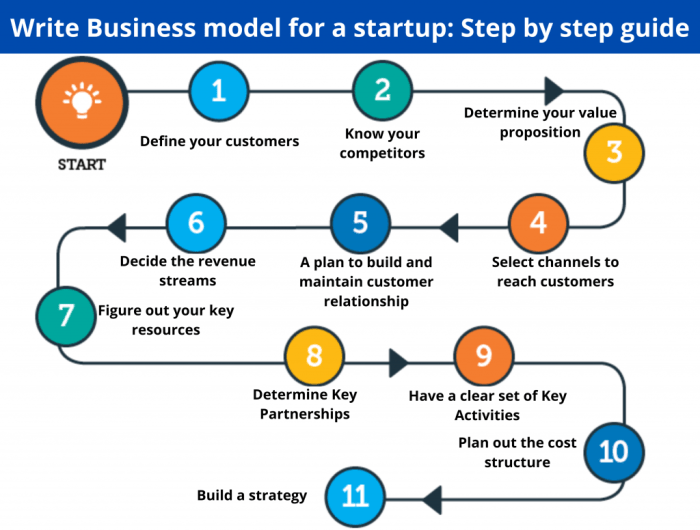
Launching a startup requires more than just a great idea; it demands a robust and adaptable business model. This guide delves into the critical components of crafting a successful startup business model, from defining your value proposition and exploring diverse revenue streams to securing funding and navigating the complexities of growth and ethical considerations. We’ll explore various strategies, practical examples, and essential considerations to help you build a sustainable and thriving venture.
We’ll examine different business model canvases, compare revenue generation strategies across various startup types, and discuss effective customer acquisition and retention techniques. Furthermore, we’ll cover crucial aspects of financial management, strategic partnerships, ethical practices, and securing funding, equipping you with the knowledge to navigate the challenges and opportunities inherent in the startup journey.
Business Ethics and Social Responsibility
Ethical considerations and social responsibility are paramount for startups, impacting not only their long-term success but also their societal impact. A strong ethical foundation builds trust with customers, investors, and employees, fostering a positive brand image and sustainable growth. Ignoring these aspects can lead to reputational damage, legal issues, and ultimately, business failure.Ethical considerations vary significantly across industries.
For example, a fintech startup must prioritize data security and user privacy, adhering to strict regulations and best practices. A food tech startup needs to focus on food safety, transparency in sourcing, and ethical labor practices throughout its supply chain. A biotech startup faces complex ethical dilemmas related to genetic engineering, patient data, and the potential societal implications of its innovations.
These varying considerations highlight the need for tailored ethical frameworks within each sector.
Ethical Considerations Across Industries
The ethical landscape for startups is diverse and depends heavily on the specific industry. A technology startup, for example, must navigate issues related to data privacy, algorithmic bias, and intellectual property rights. A fashion startup might face ethical dilemmas concerning sustainable sourcing, fair labor practices, and environmental impact. Similarly, a healthcare startup needs to prioritize patient confidentiality, data security, and the ethical implications of new medical technologies.
These considerations necessitate a thorough understanding of relevant regulations and industry best practices.
The Importance of Corporate Social Responsibility for Startups
Corporate Social Responsibility (CSR) is not merely a trend; it’s a crucial element for long-term startup success. By integrating CSR into their business model, startups demonstrate their commitment to ethical practices and positive societal impact. This fosters a strong brand reputation, attracts and retains top talent, and enhances investor appeal. Furthermore, a focus on CSR can lead to increased customer loyalty and a competitive advantage in a market increasingly conscious of ethical consumption.
Studies show that consumers are more likely to support businesses with strong CSR initiatives. For instance, a recent survey indicated that 66% of consumers are willing to pay more for sustainable products.
Examples of Startups with Integrated Ethical Practices
Several startups have successfully demonstrated the integration of ethical practices into their core business models. Patagonia, an outdoor clothing company, is a prime example. Their commitment to environmental sustainability, fair labor practices, and responsible sourcing has become integral to their brand identity and a key driver of their success. Similarly, TOMS Shoes, known for its “One for One” model, donates a pair of shoes for every pair purchased, showcasing a clear commitment to social responsibility.
These examples illustrate how ethical practices can not only enhance a company’s image but also contribute to its bottom line.
A Startup Code of Conduct: Emphasizing Ethical Business Practices and Environmental Sustainability
Our proposed code of conduct prioritizes ethical business practices and environmental sustainability. It Artikels key principles that guide all aspects of our operations.
We are committed to conducting our business with the highest ethical standards, transparency, and integrity. We respect the rights and dignity of all individuals, including our employees, customers, suppliers, and the communities we serve. We will operate in an environmentally responsible manner, minimizing our ecological footprint and promoting sustainable practices. We will comply with all applicable laws and regulations, and we will strive to exceed expectations in our commitment to ethical business practices.
This code encompasses data privacy and security, fair labor practices, responsible sourcing, environmental protection, and transparent communication. It will be regularly reviewed and updated to ensure its continued relevance and effectiveness. We will foster a culture of ethical awareness and accountability throughout the organization, ensuring that all employees understand and adhere to this code.
Business Coaching and Mentorship
Navigating the complexities of launching and scaling a startup can be incredibly challenging. The pressure to succeed, coupled with the constant need for innovation and adaptation, often leaves founders feeling overwhelmed. Business coaching and mentorship offer invaluable support, providing guidance, expertise, and a crucial network to help startups thrive. This section explores the significant benefits of seeking such guidance and provides resources to facilitate the process.The benefits of seeking business coaching for startup founders are numerous and far-reaching.
A skilled coach can offer a fresh perspective, identify blind spots, and provide actionable strategies to overcome obstacles. This objective viewpoint can be particularly crucial in the early stages of a startup, when founders are often deeply invested in their vision and may struggle to see potential pitfalls. Furthermore, coaching fosters self-awareness and helps founders develop crucial leadership skills essential for building and managing a successful team.
Key Areas of Business Coaching Support
Business coaching offers support across a broad spectrum of areas vital for startup success. This includes strategic planning, encompassing market analysis, competitive positioning, and the development of a robust business model. Financial management is another critical area, with coaches assisting in securing funding, managing cash flow, and implementing sound financial controls. Operational efficiency is also a key focus, with coaches helping streamline processes, optimize resource allocation, and improve overall productivity.
Finally, effective leadership and team building are crucial for growth; coaching provides tools and techniques for fostering a high-performing team and cultivating a positive work environment.
Examples of Successful Mentorship Programs for Startups
Several successful mentorship programs demonstrate the positive impact of pairing experienced entrepreneurs with aspiring founders. For instance, the Founder Institute offers a global mentorship-driven program that guides startups through the critical stages of development. Their curriculum and network of mentors have helped numerous startups achieve significant milestones. Similarly, many incubators and accelerators, such as Y Combinator and Techstars, incorporate mentorship as a core component of their programs.
These programs often connect startups with industry veterans who offer guidance and advice tailored to their specific needs. The success of these programs highlights the value of structured mentorship in fostering startup growth.
Resources for Finding Qualified Business Coaches and Mentors
Finding the right coach or mentor is a crucial step. Several resources can facilitate this process:
- Online Platforms: Websites like SCORE and MentorcliQ connect entrepreneurs with experienced mentors. These platforms often offer filtering options to find mentors with specific expertise.
- Industry Associations: Many industry-specific associations offer mentorship programs or can connect you with experienced professionals in your field.
- Networking Events: Attending industry events and conferences provides opportunities to connect with potential mentors and coaches.
- Incubators and Accelerators: Many incubators and accelerators offer mentorship as part of their programs.
- Business Schools and Universities: Some business schools and universities offer mentorship programs connecting students and alumni with experienced professionals.
Securing Business Loans and Funding
Securing funding is a critical step for any startup. Understanding the loan application process, the various loan types available, and developing effective application strategies are essential for success. This section Artikels the key aspects of securing business loans and funding for startups.
The Process of Applying for Business Loans
The process of applying for a business loan typically involves several key stages. First, you’ll need to assess your funding needs and determine the type of loan that best suits your business. This requires careful financial planning and forecasting. Next, you’ll need to gather all the necessary documentation, including financial statements, business plans, and personal credit reports.
These documents will be meticulously reviewed by the lender to assess the risk involved. Following this, you’ll submit your application and await a decision. The lender will conduct a thorough review of your application, potentially requiring additional information or clarification. Finally, if approved, you’ll negotiate the loan terms and finalize the agreement. Throughout this process, maintaining clear and consistent communication with the lender is vital.
Types of Business Loans Available to Startups
Several types of business loans cater specifically to the needs of startups. These include Small Business Administration (SBA) loans, which offer government-backed guarantees to lenders, reducing their risk. Another common option is term loans, providing a fixed amount of money to be repaid over a specified period with regular installments. Lines of credit offer flexibility, allowing startups to borrow funds as needed up to a pre-approved limit.
Microloans provide smaller amounts of funding, often suitable for businesses in their initial stages. Venture capital and angel investors represent alternative funding sources, offering equity financing in exchange for a stake in the company. Each type has its own set of requirements and advantages, necessitating careful consideration based on the startup’s specific circumstances and risk profile.
Examples of Successful Loan Applications and Strategies
A successful loan application hinges on a strong business plan demonstrating market viability, financial projections showcasing profitability, and a credible management team. For instance, a startup with a proven track record of revenue generation, strong cash flow, and a detailed plan for using the loan funds is more likely to secure funding. Conversely, a startup with weak financials, an unproven business model, or a lack of experience will face an uphill battle.
Effective strategies include building strong relationships with lenders, presenting a well-structured and persuasive loan application, and proactively addressing any concerns the lender may have. Thorough preparation and meticulous attention to detail are key elements of a successful application. Many successful applicants have leveraged strong personal credit scores and demonstrated a history of responsible financial management to bolster their application.
Checklist for Preparing a Loan Application
Preparing a comprehensive loan application requires meticulous attention to detail. A well-organized checklist ensures nothing is overlooked.
- Business Plan: A detailed and well-researched business plan outlining the company’s mission, market analysis, competitive landscape, management team, and financial projections.
- Financial Statements: Comprehensive financial statements, including income statements, balance sheets, and cash flow statements, demonstrating the financial health of the business.
- Personal Credit Report: A copy of the applicant’s personal credit report, showcasing their creditworthiness.
- Collateral: Information regarding any collateral offered to secure the loan, such as equipment, inventory, or real estate.
- Loan Application Form: A completely filled-out and accurate loan application form, including all required information.
- Supporting Documents: Any additional supporting documents requested by the lender, such as tax returns, permits, or licenses.
- Legal Documents: Relevant legal documents such as articles of incorporation, partnership agreements, or operating agreements.
Building a successful startup is a dynamic process that requires constant adaptation and innovation. By understanding the core components of a robust business model, implementing effective strategies for revenue generation, customer acquisition, and financial management, and upholding ethical business practices, startups can significantly increase their chances of long-term success. This guide provides a foundational framework, but remember that continuous learning, adaptability, and a strong understanding of your target market are key to navigating the ever-evolving landscape of the startup world.
Answers to Common Questions
What is the difference between a Lean Canvas and a Business Model Canvas?
While both are visual tools for outlining a business model, the Lean Canvas is more concise and focused on startups, emphasizing key metrics and problem/solution fit. The Business Model Canvas is broader and more comprehensive, suitable for established businesses as well.
How can I determine the right pricing strategy for my startup?
The optimal pricing strategy depends on your target market, value proposition, competition, and costs. Consider cost-plus pricing, value-based pricing, competitive pricing, or penetration pricing, and test different approaches to find what works best.
What are some common mistakes startups make with their business models?
Common mistakes include neglecting market research, underestimating costs, failing to define a clear value proposition, ignoring customer feedback, and lacking a flexible and adaptable plan.
How important is social media marketing for startups?
Social media marketing is crucial for building brand awareness, engaging with customers, and driving traffic. Choose platforms relevant to your target audience and create engaging content to maximize impact.