Mastering the art of business coaching requires a deep understanding of various methodologies, ethical considerations, and their application across diverse business functions. This guide delves into the core principles of effective business coaching, exploring different coaching models and their practical application in strategic planning, team development, and navigating financial challenges. We’ll examine how coaching techniques can be tailored to specific business needs, from sales and marketing to operations and financial management, ultimately driving growth and profitability.
Through real-world examples and case studies, we’ll illustrate the transformative power of business coaching in enhancing individual and organizational performance. The guide also addresses crucial ethical considerations, ensuring coaches maintain integrity and client autonomy while fostering a supportive and results-oriented environment. We’ll explore how business loans and financial planning strategies can be integrated into the coaching process to maximize business growth potential.
Defining Business Coaching Techniques
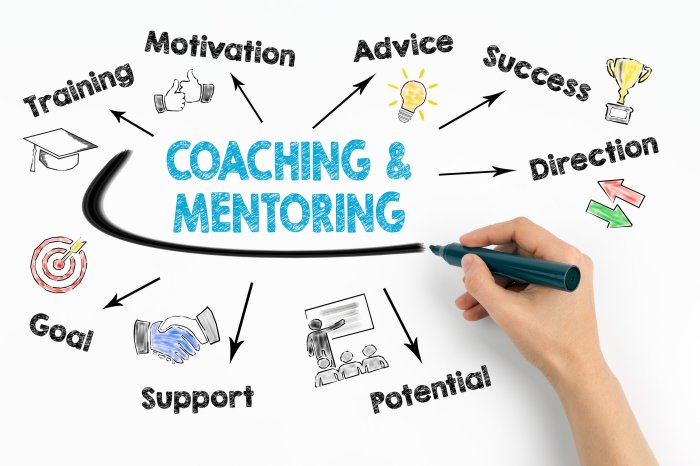
Business coaching is a collaborative process designed to enhance the performance and effectiveness of individuals and teams within a business setting. It focuses on identifying strengths, addressing weaknesses, and developing strategies to achieve specific business goals. Effective business coaching is built on a foundation of trust, mutual respect, and a commitment to continuous improvement.Effective business coaching hinges on several core principles.
Firstly, it emphasizes a client-centered approach, placing the individual’s or team’s needs and goals at the forefront. Secondly, it promotes self-discovery and empowers the coachee to identify their own solutions rather than being prescriptive. Thirdly, it fosters accountability by encouraging commitment to action plans and regular progress reviews. Finally, it relies on active listening, insightful questioning, and constructive feedback to facilitate growth and development.
Coaching Methodologies
Various methodologies guide the business coaching process, each offering a unique framework for achieving desired outcomes. The choice of methodology often depends on the specific needs of the coachee and the context of the business situation.The GROW model, for example, provides a structured approach to goal setting and achievement. It involves identifying the Goal, exploring the current Reality, outlining Options for improvement, and committing to a concrete Will to act.
This systematic approach ensures clarity and focus throughout the coaching process.Cognitive behavioral coaching (CBC) focuses on the interplay between thoughts, feelings, and behaviors. It helps individuals identify and challenge negative thought patterns that might be hindering their performance. By changing negative thought patterns, CBC aims to improve emotional regulation and behavior, leading to enhanced productivity and well-being. For example, a business leader struggling with public speaking anxiety might use CBC to identify and reframe their negative thoughts about presentations, leading to improved confidence and performance.
Examples of Successful Business Coaching Interventions
Successful interventions often involve addressing specific challenges. For instance, a sales team facing declining performance might benefit from coaching that focuses on improving sales techniques, enhancing communication skills, and building stronger customer relationships. The coaching might involve role-playing scenarios, providing feedback on sales calls, and developing personalized action plans for each team member. Similarly, a manager struggling with delegation might receive coaching to improve their leadership style, develop trust in their team, and effectively assign tasks, resulting in increased team efficiency and reduced managerial workload.
Measurable improvements in sales figures or team productivity would demonstrate the success of the intervention.
Comparison of Coaching Styles
Different coaching styles cater to diverse needs and preferences. A directive style, for example, provides more guidance and direction, which might be suitable for individuals who need clear instructions and support. In contrast, a non-directive style allows the coachee greater autonomy to explore solutions and find their own path. This style is often preferred by individuals who are self-motivated and prefer a more collaborative approach.
The choice of style depends on factors such as the coachee’s personality, experience level, and the specific challenges being addressed. A skilled coach will adapt their style to meet the individual needs of each coachee. For example, a new manager might benefit from a more directive approach initially, while a seasoned executive might thrive with a non-directive style that emphasizes strategic thinking and problem-solving.
Business Coaching and Development
Business coaching and business development are intrinsically linked, forming a powerful synergy that drives organizational growth and success. Effective business coaching provides the framework and personalized support needed to translate business development strategies into tangible results. This symbiotic relationship ensures that development initiatives are not only well-planned but also effectively implemented and monitored.Business coaching plays a pivotal role in enhancing strategic planning and implementation.
By working closely with business leaders and teams, coaches facilitate the development of clear, achievable goals, identify potential roadblocks, and provide the necessary guidance and accountability to navigate challenges. This collaborative approach ensures that strategic plans are not merely documents gathering dust on shelves, but actionable roadmaps leading to sustainable growth.
The Contribution of Coaching to Strategic Planning and Implementation
Coaching contributes to strategic planning by fostering a deeper understanding of the business’s current state, its competitive landscape, and its potential for future growth. Through insightful questioning and reflective exercises, coaches help business owners and managers clarify their vision, define their target market, and identify their unique value proposition. This process leads to more robust and well-defined strategic plans that are grounded in a thorough understanding of the business’s strengths, weaknesses, opportunities, and threats (SWOT analysis).
Furthermore, coaching provides the ongoing support and accountability necessary to ensure that the strategic plan is implemented effectively and adapted as needed in response to changing market conditions. Regular check-ins and progress reviews, facilitated by the coach, keep the business on track and allow for timely course corrections.
A Sample Coaching Program for Improving Business Development Strategies
This program focuses on enhancing business development strategies over a three-month period.Month 1: Assessment and Goal Setting. The initial phase involves a comprehensive assessment of the current business development strategies, identifying areas for improvement and establishing clear, measurable, achievable, relevant, and time-bound (SMART) goals. This includes analyzing market trends, competitive landscape, and internal capabilities.Month 2: Strategy Development and Implementation.
This phase focuses on developing and implementing specific action plans to address the identified gaps. This may involve activities such as market research, sales training, new product development, or marketing campaign implementation. The coach provides guidance and support throughout this process.Month 3: Monitoring, Evaluation, and Refinement. The final phase involves monitoring progress towards the established goals, evaluating the effectiveness of implemented strategies, and making necessary adjustments.
This includes analyzing key performance indicators (KPIs) and making data-driven decisions to optimize business development efforts.
Key Performance Indicators (KPIs) for Measuring Coaching Intervention Success
Several KPIs can be used to measure the effectiveness of a business coaching intervention focused on business development. These indicators provide objective measures of progress and allow for data-driven adjustments to the coaching strategy. Examples include:
- Increase in revenue or sales.
- Growth in market share.
- Improved customer acquisition cost.
- Enhanced customer satisfaction scores.
- Increased lead generation.
- Improved employee engagement and productivity.
The selection of specific KPIs will depend on the individual business’s goals and priorities. However, a well-rounded approach would include a mix of financial and operational metrics to provide a comprehensive picture of the coaching intervention’s impact. For instance, a company aiming to improve its online presence might track website traffic, conversion rates, and social media engagement. A company focusing on customer retention might track customer lifetime value and churn rate.
Tracking these KPIs provides a quantifiable measure of the coaching’s impact on the business’s development.
Ethical Considerations in Business Coaching
Maintaining ethical standards is paramount in business coaching, ensuring a positive and productive relationship built on trust and respect. A coach’s actions directly impact their client’s professional and personal lives, making ethical considerations central to the profession. Failing to adhere to ethical principles can lead to damaged reputations, legal issues, and ultimately, hinder the client’s growth.Ethical Responsibilities of a Business CoachBusiness coaches bear significant ethical responsibilities.
They must act with integrity, maintaining the highest standards of professional conduct. This includes honesty in all interactions, transparency in their methods and fees, and a commitment to confidentiality. Coaches should prioritize their clients’ best interests, even when it means challenging their perspectives or approaches. They are responsible for ensuring their competence in the areas they coach and for continually developing their skills and knowledge.
Furthermore, they must be aware of and avoid any conflicts of interest that could compromise their objectivity or the client’s trust.
Ethical Dilemmas in Business Coaching
Several ethical dilemmas can arise in business coaching scenarios. For instance, a coach might face a situation where a client’s actions, while legal, are ethically questionable. The coach must navigate this carefully, balancing their duty to support the client’s goals with their responsibility to uphold ethical principles. Another common dilemma involves confidentiality. A coach may receive confidential information that, if disclosed, could harm the client.
Maintaining confidentiality is crucial, yet there might be exceptional circumstances (such as legal mandates) requiring disclosure. Finally, a coach may be tempted to overstep professional boundaries, developing a personal relationship with a client that could compromise their objectivity and professional judgment. For example, a coach might find themselves becoming overly involved in a client’s personal life or offering advice outside their area of expertise.
A Code of Conduct for Business Coaches
A robust code of conduct should guide business coaches. It should emphasize:
Integrity: Coaches must act honestly and transparently in all interactions with clients, colleagues, and other stakeholders.
Confidentiality: All information shared by the client must be kept confidential unless legally required to be disclosed.
Competence: Coaches must only work within their area of expertise and continually develop their skills and knowledge.
Objectivity: Coaches should maintain impartiality and avoid conflicts of interest.
Respect: Coaches must treat clients with respect, valuing their autonomy and individuality.
Professional Boundaries: Coaches must maintain appropriate professional boundaries with clients, avoiding personal relationships that could compromise their objectivity.
Maintaining Client Autonomy and Avoiding Conflicts of Interest
Maintaining client autonomy is essential. Coaches should empower clients to make their own decisions, acting as facilitators rather than dictators. This includes respecting clients’ choices, even if the coach disagrees with their decisions. Avoiding conflicts of interest is equally vital. This means disclosing any potential conflicts of interest and refraining from situations where personal gain could influence coaching decisions.
For instance, a coach should not recommend their own products or services unless they are truly the best option for the client. Similarly, a coach should not accept gifts or favors from clients that could compromise their objectivity.
Business Coaching and Specific Business Functions
Business coaching techniques, while possessing a core set of principles, require adaptation depending on the specific business function they are applied to. Understanding the unique challenges and opportunities within each department allows for a more targeted and effective coaching approach, leading to improved individual and team performance. This section explores the application of business coaching across various business functions, highlighting successful interventions and demonstrating the adaptability of coaching techniques.
The application of business coaching varies significantly across different business functions due to the distinct nature of each role and the specific performance metrics involved. Sales teams, for example, focus on revenue generation and client relationships, while marketing teams concentrate on brand building and lead generation. Operations teams, on the other hand, prioritize efficiency, process optimization, and resource allocation.
A successful business coach understands these nuances and tailors their approach accordingly.
Business Coaching in Sales
Sales coaching often focuses on improving sales techniques, negotiation skills, and closing rates. Effective coaching in this area might involve role-playing scenarios to refine sales pitches, analyzing sales data to identify areas for improvement, and developing strategies for handling objections. For example, a coach might work with a salesperson struggling with closing deals by identifying and addressing underlying confidence issues or refining their closing techniques through structured practice and feedback.
This targeted approach, focused on the specific challenges of sales, maximizes the impact of coaching interventions.
Business Coaching in Marketing
Marketing coaching might involve developing more effective marketing strategies, improving digital marketing skills, or enhancing brand management capabilities. A coach could work with a marketing team to analyze campaign performance data, identify underperforming channels, and develop strategies to improve ROI. For instance, a coach might guide a team in refining their social media strategy by analyzing engagement metrics and experimenting with different content formats to optimize reach and engagement.
The focus here shifts from immediate sales to long-term brand building and customer acquisition.
Business Coaching in Operations
Operations coaching often centers on process improvement, efficiency enhancement, and resource optimization. Coaches in this area might work with operations teams to identify bottlenecks in workflows, streamline processes, and improve overall productivity. A case study could involve a manufacturing company where coaching helped optimize the production line, leading to a 15% reduction in production time and a 10% increase in output.
This highlights the tangible benefits of coaching when applied to operational challenges.
Team Performance Improvement Through Coaching
The application of business coaching techniques significantly improves team performance across departments. By fostering a culture of continuous improvement, coaching empowers teams to identify and overcome challenges collectively. In sales, coaching can lead to increased sales revenue and improved customer satisfaction. In marketing, it can result in more effective campaigns and a stronger brand presence. In operations, it can lead to greater efficiency, reduced costs, and improved product quality.
The overall impact is a more cohesive, high-performing organization.
Adapting Coaching Techniques to Specific Needs
The adaptability of coaching techniques is crucial for success. For instance, a coach might employ a more directive approach with a sales team needing immediate performance improvements, while adopting a more collaborative and developmental approach with a marketing team working on long-term strategic initiatives. The coach’s ability to adjust their style and methods based on the specific context and individual needs of the team or individual is paramount.
This flexibility ensures that coaching interventions are relevant, effective, and tailored to the unique challenges faced by each business function.
Ultimately, effective business coaching transcends mere skill development; it cultivates a culture of continuous improvement and strategic thinking within organizations. By understanding the principles Artikeld in this guide, coaches can empower their clients to overcome challenges, seize opportunities, and achieve sustainable success. The integration of coaching into various business functions, combined with a strong ethical foundation and strategic financial planning, provides a powerful framework for driving meaningful and lasting organizational growth.
This holistic approach ensures that businesses not only survive but thrive in today’s dynamic and competitive landscape.
Common Queries
What is the difference between business coaching and mentoring?
While both offer guidance, mentoring often focuses on broader career development, while business coaching is more targeted towards specific business goals and skill improvement. Mentors often draw on their own experience, whereas coaches utilize structured methodologies.
How long does a typical business coaching engagement last?
The duration varies greatly depending on the client’s needs and goals. Some engagements may last a few months, while others extend for years, often involving periodic reviews and adjustments to the coaching plan.
How much does business coaching cost?
Pricing varies widely based on the coach’s experience, the scope of the engagement, and the client’s specific needs. It’s best to discuss fees directly with potential coaches.
Can business coaching help with overcoming burnout?
Yes, absolutely. Business coaching can help identify the root causes of burnout, develop strategies for stress management, and create a sustainable work-life balance plan.