In today’s dynamic business landscape, leveraging the right tools is paramount for success. Business development, the engine of growth, relies heavily on efficient software and strategic implementation. This guide delves into the multifaceted world of business development tools and software, exploring their capabilities, integration strategies, and ethical considerations. We’ll examine how these tools streamline processes, improve decision-making, and ultimately drive significant returns on investment.
From CRM systems that nurture client relationships to project management platforms ensuring seamless execution, we’ll navigate the diverse array of solutions available. We will also discuss the crucial role of data analytics in informing strategic choices and the importance of ethical considerations in data usage. The goal is to provide a clear understanding of how to select, implement, and optimize these tools to maximize your business’s potential for growth.
Defining Business Development Tools and Software
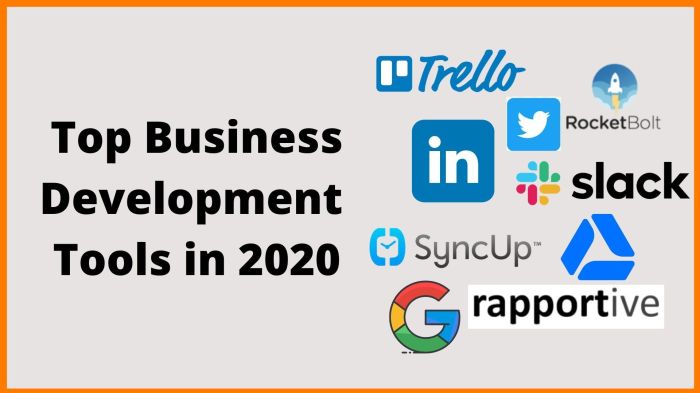
Business development, the engine driving growth for any organization, relies heavily on efficient tools and software. These tools streamline processes, enhance productivity, and provide valuable insights, ultimately contributing to increased revenue and market share. This section will explore several key categories of business development software and their functionalities.
CRM Software in Business Development
Customer Relationship Management (CRM) software forms the backbone of many business development strategies. Core functionalities include contact management (centralized storage and organization of customer data), lead management (tracking potential customers through the sales pipeline), sales force automation (automating repetitive tasks like email marketing and reporting), and opportunity management (monitoring and managing sales opportunities). Effective CRM systems allow for better customer segmentation, personalized communication, and improved sales forecasting, all crucial for targeted business development initiatives.
For example, a CRM might identify a group of high-value customers requiring specific attention, leading to a tailored outreach campaign.
Project Management Tools in Business Development
Streamlining business development initiatives requires robust project management. Tools in this category offer features like task assignment, deadline setting, progress tracking, and resource allocation. This ensures that projects remain on schedule and within budget. Effective project management minimizes delays, improves team collaboration, and fosters accountability. For instance, a project management tool might be used to coordinate the launch of a new product, assigning tasks to different team members and tracking their progress against milestones.
This organized approach allows for timely execution and reduces the likelihood of project failure.
Marketing Automation Software in Business Development
Marketing automation software plays a vital role in enhancing business development by automating repetitive marketing tasks. Examples include HubSpot, Marketo, and Pardot. These platforms automate email marketing campaigns, social media posting, lead nurturing, and other marketing activities. This frees up marketing teams to focus on more strategic initiatives. For example, a marketing automation platform could automate a series of emails to nurture leads, gradually introducing them to the company’s products or services.
This personalized approach can significantly improve conversion rates.
Sales Intelligence Platforms: A Comparison
Sales intelligence platforms provide crucial insights into potential customers, competitors, and market trends. Different platforms offer varying functionalities, ranging from basic contact information to in-depth market analysis. Some focus on lead generation, while others emphasize competitor analysis or market research. For example, a platform like ZoomInfo might focus on providing comprehensive contact details and firmographic data, while another might specialize in competitive intelligence, offering insights into competitor strategies and market share.
The choice depends on the specific needs of the business development team.
Comparison of Business Development Tools
| Tool | Core Functionality | Pricing Model | Key Strengths |
|---|---|---|---|
| Salesforce | CRM, Sales Automation, Marketing Automation | Subscription-based | Comprehensive features, strong integrations |
| HubSpot | CRM, Marketing Automation, Sales Automation, Service Hub | Freemium & Subscription-based | User-friendly interface, robust free plan |
| Asana | Project Management, Task Management, Collaboration | Freemium & Subscription-based | Excellent for team collaboration, intuitive interface |
| ZoomInfo | Sales Intelligence, Lead Generation | Subscription-based | Comprehensive contact data, robust search capabilities |
Business Development Strategies & Software Integration
Effective business development hinges on a strategic blend of insightful planning and efficient execution. Integrating the right software tools significantly enhances this process, enabling data-driven decision-making and streamlined workflows. This section explores how various software solutions contribute to successful business development strategies.Data analytics tools provide crucial insights into market trends, customer behavior, and sales performance, directly informing the development of effective strategies.
Collaboration platforms, meanwhile, optimize teamwork, leading to more cohesive and productive business development efforts. Finally, careful selection and integration of various tools maximize efficiency and ROI.
Data Analytics Tools and Business Development Strategy
Data analytics tools offer invaluable insights into various aspects of a business, enabling data-driven decision-making in business development. By analyzing sales data, market research, and customer interactions, businesses can identify key trends, predict future performance, and tailor their strategies accordingly. For example, analyzing website traffic data can reveal which marketing campaigns are most effective, allowing for optimization and increased ROI.
Similarly, analyzing customer segmentation data can help tailor marketing messages and sales approaches for better conversion rates. This data-driven approach ensures that business development efforts are focused on the most promising opportunities and high-value prospects. Tools like Salesforce, HubSpot, and Google Analytics provide the necessary functionalities for this kind of analysis.
Collaboration Platforms and Team Effectiveness
Effective collaboration is paramount to success in business development. Collaboration platforms such as Slack, Microsoft Teams, or Asana facilitate seamless communication and task management among team members, fostering a more efficient and productive work environment. These platforms enable real-time communication, shared document access, and centralized project management, minimizing misunderstandings and ensuring everyone remains on the same page. For instance, a business development team can use a shared project management tool to track leads, assign tasks, and monitor progress on various initiatives.
This centralized approach ensures transparency and accountability, leading to improved team performance and better outcomes.
Key Performance Indicators (KPIs) in Business Development
Business development tools track several key performance indicators (KPIs) to measure the effectiveness of strategies and initiatives. These KPIs provide quantifiable data to assess progress, identify areas for improvement, and demonstrate the return on investment (ROI) of business development efforts. Common KPIs include lead generation rates, conversion rates, customer acquisition cost (CAC), customer lifetime value (CLTV), and revenue growth.
For example, tracking lead generation rates helps assess the effectiveness of marketing campaigns, while monitoring conversion rates indicates how well leads are being nurtured and converted into paying customers. Analyzing CAC and CLTV provides insights into the profitability of customer acquisition and the long-term value of customers.
Best Practices for Integrating Business Development Tools
Integrating various business development tools requires a strategic approach to maximize efficiency and avoid data silos. A well-defined integration strategy ensures seamless data flow between different platforms, providing a unified view of customer interactions and business performance. Best practices include choosing tools that offer robust API integrations, establishing clear data governance policies, and providing comprehensive training to team members on using the integrated system.
Regular monitoring and evaluation of the integrated system are crucial to identify and address any issues promptly. For example, integrating CRM software with marketing automation tools allows for automated lead nurturing and personalized communication, leading to improved conversion rates.
Workflow Diagram: A Typical Business Development Process
Imagine a workflow diagram showing a simplified business development process. The diagram starts with Lead Generation (using a marketing automation tool like HubSpot), then moves to Lead Qualification (using a CRM like Salesforce), followed by Lead Nurturing (using email marketing software like Mailchimp), and finally, closing the deal and managing the account (using the CRM again). Each stage involves data entry and updates within the relevant software, and the data is automatically synced across the platforms due to pre-established integrations.
This creates a seamless, efficient process with minimal manual data entry and maximum data visibility across the team. This illustrates how various tools can be integrated to create a streamlined and efficient business development process.
The Impact of Business Development Tools on Growth
Business development tools and software significantly impact a company’s growth trajectory by streamlining processes, improving efficiency, and providing data-driven insights. Their implementation leads to measurable improvements across various aspects of the business, from lead generation to customer retention and ultimately, profitability. This section will explore the multifaceted ways these tools contribute to enhanced growth.
Improved Lead Generation and Conversion Rates
Effective business development tools enhance lead generation through automation and targeted outreach. Customer Relationship Management (CRM) systems, for example, allow for automated email campaigns, personalized messaging, and lead scoring, which helps prioritize high-potential prospects. Marketing automation platforms integrate seamlessly with CRMs, enabling the creation of sophisticated nurture sequences that guide leads through the sales funnel. This targeted approach increases the likelihood of converting leads into paying customers.
Furthermore, tools that track website analytics provide valuable insights into user behavior, allowing for the optimization of marketing materials and website content to further improve lead generation and conversion rates.
Case Study: HubSpot’s Impact on Acme Corporation’s Growth
Acme Corporation, a small manufacturing company, implemented HubSpot’s CRM and marketing automation platform. Prior to implementation, their lead generation and conversion process was largely manual and inefficient. After integrating HubSpot, Acme Corporation saw a 30% increase in qualified leads within six months. This was attributed to automated email marketing campaigns targeting specific customer segments, improved lead nurturing through personalized content, and enhanced tracking of lead interactions.
Furthermore, the improved organization of their sales pipeline, facilitated by HubSpot’s features, resulted in a 15% increase in closed deals within the same timeframe. This case study highlights the tangible benefits of implementing comprehensive business development software.
Improved Customer Relationship Management
Business development tools dramatically improve customer relationship management (CRM) by centralizing customer data and interactions. CRMs provide a single source of truth for all customer-related information, including contact details, purchase history, communication logs, and support tickets. This unified view allows sales and customer service teams to provide more personalized and efficient service, leading to improved customer satisfaction and retention.
Features such as automated follow-ups, personalized email templates, and integrated communication channels (e.g., live chat, social media) further strengthen customer relationships and foster loyalty.
Enhanced Sales Forecasting and Pipeline Management
Sales forecasting and pipeline management are significantly improved through the use of business intelligence (BI) tools and CRM dashboards. These tools analyze historical sales data, current pipeline activities, and market trends to predict future sales performance. This data-driven approach allows businesses to make informed decisions regarding resource allocation, sales strategies, and budget planning. Moreover, real-time visibility into the sales pipeline enables sales managers to identify potential bottlenecks, track progress towards sales targets, and proactively address any issues that might impede sales growth.
Return on Investment (ROI) of Business Development Software
The ROI of implementing business development software is often significant and measurable. While the initial investment can vary depending on the chosen tools and their features, the long-term benefits far outweigh the costs. Improved lead generation and conversion rates directly translate into increased revenue. Enhanced customer relationship management leads to higher customer retention rates, reducing customer acquisition costs.
Better sales forecasting and pipeline management improve sales efficiency and reduce wasted resources. By tracking key performance indicators (KPIs) such as lead conversion rates, customer lifetime value, and sales cycle length, businesses can accurately quantify the ROI of their investment in business development software. For instance, a 10% increase in conversion rates coupled with a 5% reduction in customer churn can result in a substantial increase in overall profitability, easily justifying the initial investment.
Ethical Considerations in Business Development
The increasing reliance on data analytics and sophisticated software in business development presents a complex ethical landscape. Navigating this requires a proactive and considered approach, ensuring responsible data handling, transparent practices, and a commitment to fairness and integrity. Ignoring these considerations can lead to reputational damage, legal repercussions, and a loss of customer trust.
Data Analytics and Ethical Implications
The use of data analytics in business development offers significant advantages, allowing for targeted marketing, improved customer segmentation, and more effective resource allocation. However, the power of these tools also brings ethical challenges. For example, the potential for bias in algorithms can lead to discriminatory practices, such as unfairly excluding certain demographics from marketing campaigns or opportunities. Furthermore, the use of predictive analytics to anticipate customer behavior raises questions about privacy and autonomy.
Responsible data analysis requires careful consideration of potential biases, rigorous testing for fairness, and transparency in how data is used. Organizations should strive to ensure their algorithms are not perpetuating existing societal inequalities and are actively working to mitigate any potential for discrimination.
Data Privacy and Security
Protecting customer data is paramount. Business development tools often involve the collection and processing of sensitive personal information. Failing to adequately secure this data can result in significant breaches, leading to financial losses, reputational damage, and legal penalties. Compliance with relevant data protection regulations, such as GDPR and CCPA, is crucial. This includes implementing robust security measures, obtaining informed consent for data collection, and ensuring transparency about data usage.
Organizations should invest in appropriate security infrastructure and regularly audit their data practices to identify and mitigate vulnerabilities. Proactive measures, such as employee training on data security best practices, are also essential.
Ethical Dilemmas and Resolution Strategies
Several ethical dilemmas can arise in business development. For instance, the use of deceptive marketing tactics, such as misleading advertising or manipulative sales techniques, can severely damage a company’s reputation and erode customer trust. Another example is the conflict between maximizing profits and acting in the best interests of stakeholders, including employees, customers, and the wider community. Addressing these dilemmas requires a commitment to ethical decision-making frameworks, such as utilitarianism (maximizing overall good), deontology (adhering to moral duties), or virtue ethics (focusing on character and integrity).
A robust ethical framework, coupled with clear guidelines and a culture of ethical behavior, can provide a structure for navigating complex situations and making responsible choices. Transparency and accountability are key to building and maintaining trust.
Approaches to Ethical Decision-Making
Different approaches to ethical decision-making exist. A compliance-based approach focuses on adhering to legal and regulatory requirements, while a values-based approach prioritizes organizational values and ethical principles. A risk-based approach identifies and mitigates potential ethical risks. The most effective approach often involves a combination of these, creating a comprehensive ethical framework that balances legal compliance, organizational values, and risk management.
Regular ethical audits and reviews are crucial to ensure the effectiveness of the chosen approach and to adapt to evolving ethical challenges.
Best Practices for Maintaining Ethical Standards
Maintaining ethical standards requires a multi-faceted approach. This includes establishing a clear code of ethics, providing regular ethical training for employees, implementing robust data governance policies, and creating mechanisms for reporting and investigating ethical violations. Regularly reviewing and updating these policies is essential to adapt to changes in technology, regulations, and societal expectations. Furthermore, fostering a culture of ethical behavior, where employees feel empowered to raise concerns and challenge unethical practices, is critical.
Independent ethical reviews and audits can provide an external perspective and ensure accountability. Transparency in data usage and decision-making processes helps build trust with customers and stakeholders.
Business Coaching and Development Tools
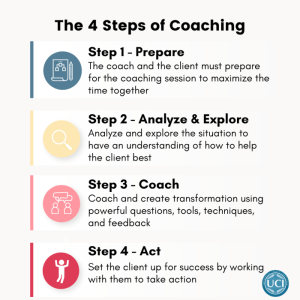
Business coaching significantly enhances the effectiveness of business development tools by providing the human element crucial for successful implementation and utilization. While software provides the structure and data, coaching offers the strategic guidance, personalized support, and motivational drive needed to maximize results. This synergy leads to a more effective and efficient business development process.
The Role of Business Coaching in Fostering a Growth Mindset
Business coaching plays a vital role in cultivating a growth mindset within a business development team. Coaches work with team members to identify limiting beliefs and replace them with empowering perspectives. They encourage experimentation, learning from failures, and embracing challenges as opportunities for growth. This fosters a culture of continuous improvement and innovation, directly impacting the team’s ability to effectively leverage business development tools.
For instance, a coach might guide a team struggling with CRM adoption by reframing their resistance as a challenge to overcome, rather than an insurmountable obstacle. This shift in perspective, facilitated by the coach, empowers the team to actively seek solutions and improve their proficiency with the CRM system.
Overcoming Challenges in Using Business Development Tools Through Coaching
Business coaching provides targeted support in navigating the challenges inherent in utilizing business development tools. For example, a team struggling with data analysis within a marketing automation platform might receive coaching to improve their data interpretation skills and strategic decision-making based on that data. Coaching also helps teams overcome resistance to change by providing personalized strategies to adapt to new tools and processes.
A coach might work individually with team members to address specific anxieties or concerns, fostering a more receptive environment for technological adoption. Similarly, if a team is struggling with the integration of multiple business development tools, a coach can help them streamline their workflows and optimize their processes, making the tools more efficient and less overwhelming.
Comparing Individual and Group Business Coaching
Individual coaching offers personalized attention and tailored strategies, addressing specific challenges and skill gaps within individual team members. This approach is particularly beneficial for addressing deeply rooted issues or providing specialized support for complex tools. Group coaching, on the other hand, fosters collaboration, shared learning, and a sense of community. It’s effective for building team cohesion, improving communication, and establishing shared understanding of tools and processes.
The best approach often involves a combination of both, leveraging the strengths of each to create a comprehensive development program. For example, individual sessions could address individual skill gaps identified during group sessions, reinforcing learning and promoting consistent application of best practices.
Key Skills of a Business Coach Guiding Business Development Teams
The effectiveness of coaching hinges on the coach’s skillset. A strong business coach working with business development teams using software should possess:
- Deep understanding of business development principles and strategies.
- Proficiency in various business development tools and software.
- Exceptional communication and interpersonal skills to build rapport and trust.
- Strong coaching and mentoring abilities to guide and support team members.
- Analytical skills to interpret data and identify areas for improvement.
- Ability to tailor coaching approaches to individual learning styles and needs.
- Knowledge of change management principles to facilitate smooth adoption of new tools.
- Problem-solving skills to help teams overcome challenges and find innovative solutions.
- A growth mindset and a passion for continuous learning.
Business Loans and Business Development
Securing funding is often a critical step in implementing effective business development strategies. Business loans provide a viable avenue for acquiring the necessary tools and software to enhance operational efficiency, expand market reach, and ultimately drive growth. Understanding the loan process and its implications is crucial for businesses seeking to leverage technology for competitive advantage.
Financing Business Development Tools with Loans
Business loans can be instrumental in financing the purchase and implementation of various business development tools, including Customer Relationship Management (CRM) software, marketing automation platforms, project management tools, and data analytics software. These tools often represent significant upfront costs, but the potential return on investment (ROI) can justify the expense. A loan allows businesses to access this capital immediately, accelerating their digital transformation and enabling faster growth compared to relying solely on organic growth or internal resources.
For example, a small marketing agency might secure a loan to purchase a sophisticated email marketing platform, enabling them to reach a wider audience and increase client acquisition.
Lender Considerations for Business Development Loan Applications
Lenders assess several factors when evaluating loan applications for business development initiatives. These include the applicant’s credit history, business plan, financial projections, and the potential ROI of the proposed investment. A strong business plan detailing the specific tools to be acquired, their anticipated impact on revenue and efficiency, and a clear repayment strategy significantly increases the likelihood of loan approval.
Lenders also scrutinize the management team’s experience and the overall financial health of the business. A history of consistent profitability and sound financial management strengthens the application. Furthermore, the specific technology being acquired and its alignment with the business’s overall strategic goals is a key factor in the lender’s decision-making process.
Examples of Successful Business Development Projects Funded by Loans
Numerous businesses have successfully leveraged loans to finance business development projects. For instance, a rapidly growing e-commerce business might secure a loan to implement a robust inventory management system, leading to reduced operational costs and improved order fulfillment. This system’s efficiency improvements directly translate to increased profitability and faster growth. Another example could be a manufacturing company securing a loan to implement a new enterprise resource planning (ERP) system, streamlining operations and improving supply chain management.
This integration of advanced technology, funded by a loan, could lead to significant cost savings and increased productivity.
Types of Business Loans for Technology Acquisition
Several types of business loans are available for technology acquisition and implementation. These include term loans, lines of credit, and equipment financing. Term loans provide a fixed amount of capital over a set period, while lines of credit offer flexible access to funds as needed. Equipment financing specifically targets the purchase of equipment, including software licenses and hardware, often with the equipment itself serving as collateral.
The choice of loan type depends on the business’s specific needs and financial situation. For example, a business requiring a large upfront investment might opt for a term loan, while a business with fluctuating funding needs might prefer a line of credit.
Financial Model: Cost-Benefit Analysis of a Business Development Software Loan
Let’s consider a hypothetical scenario: a small business needs CRM software costing $10,000. They secure a 3-year loan at 8% interest. The annual loan payment would be approximately $3,700. The CRM software is projected to increase sales by 15% annually, generating an additional $15,000 in revenue in year one, $17,250 in year two, and $19,812.50 in year three.
Subtracting the annual loan payment, the net profit increase is $11,300, $13,550, and $16,112.50 respectively over the three years. This simple model illustrates a positive ROI, justifying the loan. However, a comprehensive financial model should include all associated costs, such as implementation fees, training, and potential ongoing maintenance expenses. A more detailed analysis would also consider factors like the potential for increased customer retention and reduced customer acquisition costs.
The actual figures would vary significantly based on the specific business, software, and loan terms.
Business Models, Strategies, and Travel
The interplay between business models, strategic planning, and business travel significantly impacts a company’s success. Understanding how these elements interact is crucial for effective business development. The right tools and strategies, coupled with well-managed travel, can unlock significant growth opportunities.
Business Models and Tool Selection
Different business models inherently require different tools and software. A subscription-based SaaS company will prioritize CRM and customer engagement tools, focusing on user acquisition and retention metrics. Conversely, a manufacturing company might focus on supply chain management software, inventory control systems, and production planning tools. A project-based consulting firm, on the other hand, will likely utilize project management software and time-tracking tools to ensure profitability and efficient resource allocation.
The core business model dictates the key performance indicators (KPIs) and, consequently, the software needed to track and improve them.
Business Strategy and Software Implementation
A well-defined business strategy is paramount in guiding the selection and implementation of business development software. For instance, a company aiming for rapid market expansion will invest in tools that facilitate efficient lead generation, sales pipeline management, and international market research. A company prioritizing customer retention, however, might focus on CRM systems with robust customer service integration and advanced analytics for personalized engagement.
The strategic goals—whether they are market penetration, product diversification, or operational efficiency—should directly inform the choice of software and its integration into existing workflows. Failing to align software choices with strategic objectives can lead to inefficient resource allocation and missed opportunities.
Business Travel’s Enhancement of Business Development
Business travel, when strategically planned and executed, offers unparalleled opportunities for business development. In-person meetings foster stronger relationships with clients and partners, facilitating trust-building and collaborative problem-solving. Attending industry conferences and trade shows allows for networking with potential clients, competitors, and industry experts, providing valuable insights and market intelligence. Site visits to potential suppliers or manufacturing facilities allow for a thorough understanding of operational processes and quality control, crucial for strategic partnerships.
Furthermore, exploring new markets firsthand provides invaluable context for marketing and sales strategies.
Approaches to Business Travel Management
Several approaches to business travel management exist, each with its strengths and weaknesses concerning business development. A highly structured, centralized approach, using a travel management company (TMC), offers cost savings through bulk bookings and negotiated rates. However, it can sometimes lack the flexibility needed for spontaneous meetings or urgent travel requirements. A decentralized approach, giving individual employees more autonomy, allows for greater responsiveness but risks inconsistencies in booking practices and potentially higher overall costs.
A hybrid approach, combining centralized booking with employee flexibility, aims to strike a balance between cost efficiency and operational agility. The optimal approach depends on the company’s size, culture, and specific business development needs.
Checklist for Optimizing Business Travel Expenses
Effective business travel management requires careful planning and expense control. The following checklist helps maximize the impact of business trips while minimizing unnecessary costs:
- Pre-Trip Planning: Research and book flights and accommodation well in advance to secure the best rates. Explore alternative transportation options (e.g., train travel) for cost-effectiveness.
- Meeting Optimization: Schedule meetings efficiently to minimize travel time and maximize productivity. Consider virtual meeting options where appropriate to reduce travel expenses.
- Expense Tracking: Utilize expense tracking software or apps to meticulously record all travel-related expenses. Maintain receipts for all transactions.
- Negotiation and Leverage: Negotiate rates with hotels, airlines, and car rental companies. Take advantage of loyalty programs and corporate discounts.
- Post-Trip Review: Analyze travel expenses to identify areas for improvement and cost savings in future trips. Document lessons learned and best practices.
Mastering the art of business development requires a strategic blend of insightful planning and efficient execution. The tools and software discussed throughout this guide represent invaluable assets in this pursuit. By understanding their capabilities, integrating them effectively, and adhering to ethical best practices, businesses can unlock unprecedented growth opportunities. The journey to enhanced productivity and profitability begins with the informed selection and skillful utilization of the right technological solutions.
Remember, the key lies not just in acquiring these tools, but in strategically leveraging them to achieve your specific business objectives.
Key Questions Answered
What is the average cost of implementing business development software?
Costs vary greatly depending on the specific software, features, and number of users. Expect a range from free options with limited functionality to thousands of dollars annually for enterprise-level solutions. Consider a cost-benefit analysis to justify your investment.
How long does it typically take to see a return on investment (ROI) from business development software?
The ROI timeline depends on factors like the software’s effectiveness, your team’s adoption rate, and the overall business strategy. Some companies see results within months, while others may require a longer period, sometimes up to a year or more.
What are the key challenges in integrating multiple business development tools?
Challenges include data silos, compatibility issues between different platforms, and the need for extensive training to ensure proper usage. Careful planning, selection of compatible tools, and robust training programs are crucial for successful integration.
How can I ensure data security and privacy when using business development tools?
Choose reputable vendors with strong security protocols, implement robust access controls, and comply with relevant data privacy regulations (e.g., GDPR, CCPA). Regularly review and update your security measures.